EuMo partnered with the organisation to align brand strategy with business structure, creating a purpose-driven architecture anchored in the idea of “Renewing Hope.” The resulting system enables clarity, differentiation and scalable growth across markets and platforms.
Luthra Group
Environment & Sustainability
Brand Experience
Brand Strategy
Visual Identity Design
Rebranding
Positioning
Brand World
Communication Strategy
Brand Collaterals
Brand Architecture
Websites (UI/UX)
Founded in 1980, Luthra Group has built a strong presence in India’s waste management and environmental services sector, transforming waste into value, enabling cleaner fuels and creating sustainable water solutions. Its flagship brand, GEPIL, accumulated significant market equity over decades, becoming widely recognised within the industry.
As the Group expanded, growing to over 16 companies across multiple segments, the ambition shifted from operational growth to strategic coherence.
Luthra Group sought to —
■ Establish a clear group-level identity
■ Align purpose with market differentiation across diverse businesses
■ Build a brand architecture that could support scale and innovation
■ Ensure consistency of voice and meaning across physical, digital and organisational platforms
EuMo was engaged to create a purpose-driven brand strategy and architecture that could translate business ambition into a coherent, future-ready brand system.
While GEPIL carried strong market equity, the rapid expansion of the Luthra Group into multiple businesses risked fragmenting how the organisation was understood. Different entities were speaking in different voices, and the Group lacked a unifying narrative that could explain why these businesses existed together.
This was a clear signal that brand strategy and positioning needed to precede identity and architecture.
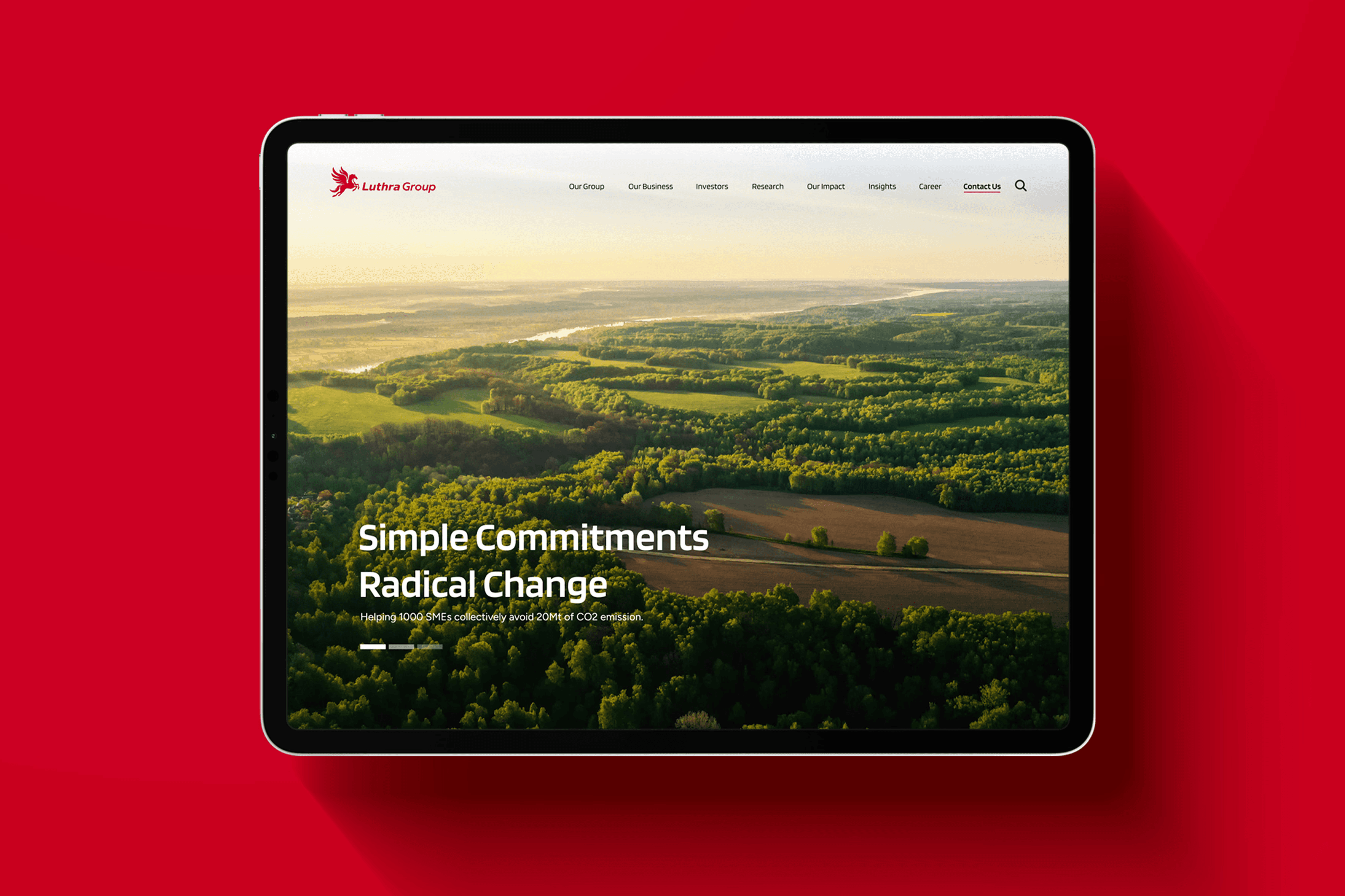
EuMo’s work began with deep qualitative inquiry with leadership interviews, management workshops, portfolio audits, and social listening, to uncover what truly bound the Group together beyond sector classifications.
The defining strategic insight was distilled into a single, unifying idea —
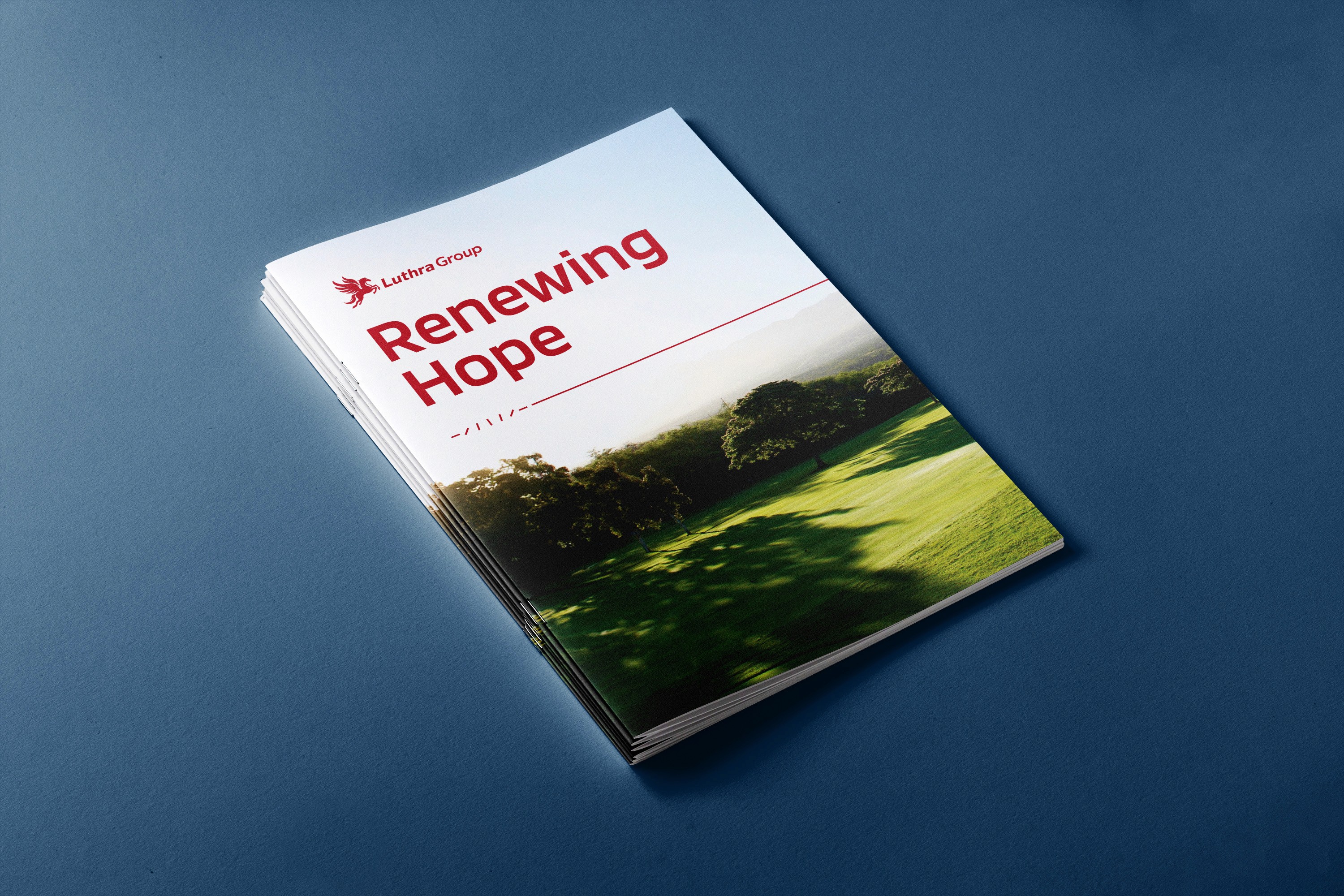
Renewing Hope
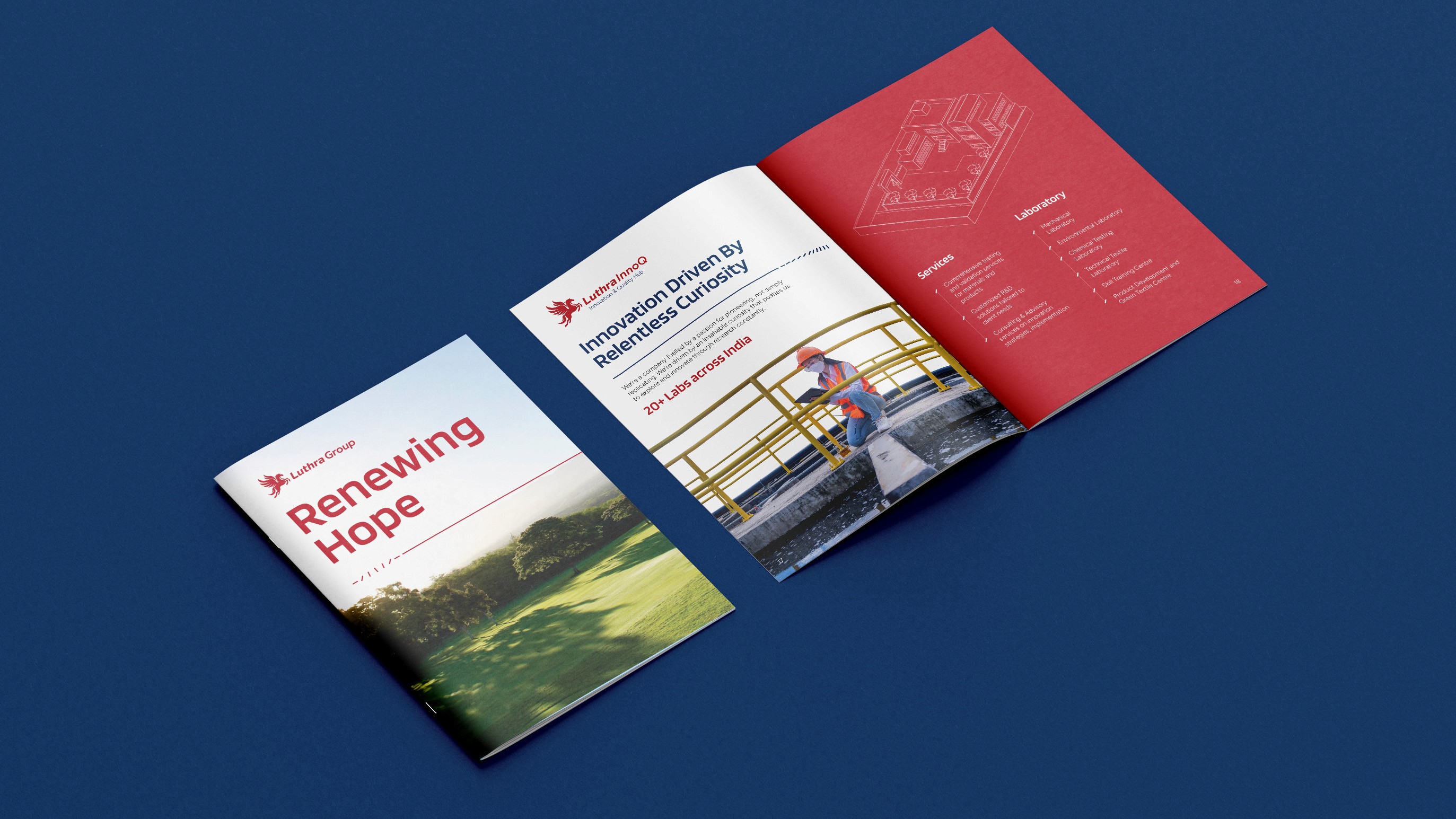
“Renewing Hope” captures the Group’s deeper purpose across Energy, Water and Environmental services, restoring resources, improving quality of life,and enabling sustainable futures. Importantly it worked at both emotional and strategic levels, allowing diverse businesses to align under one meaningful promise.
From this positioning, EuMo translated strategy into structure.
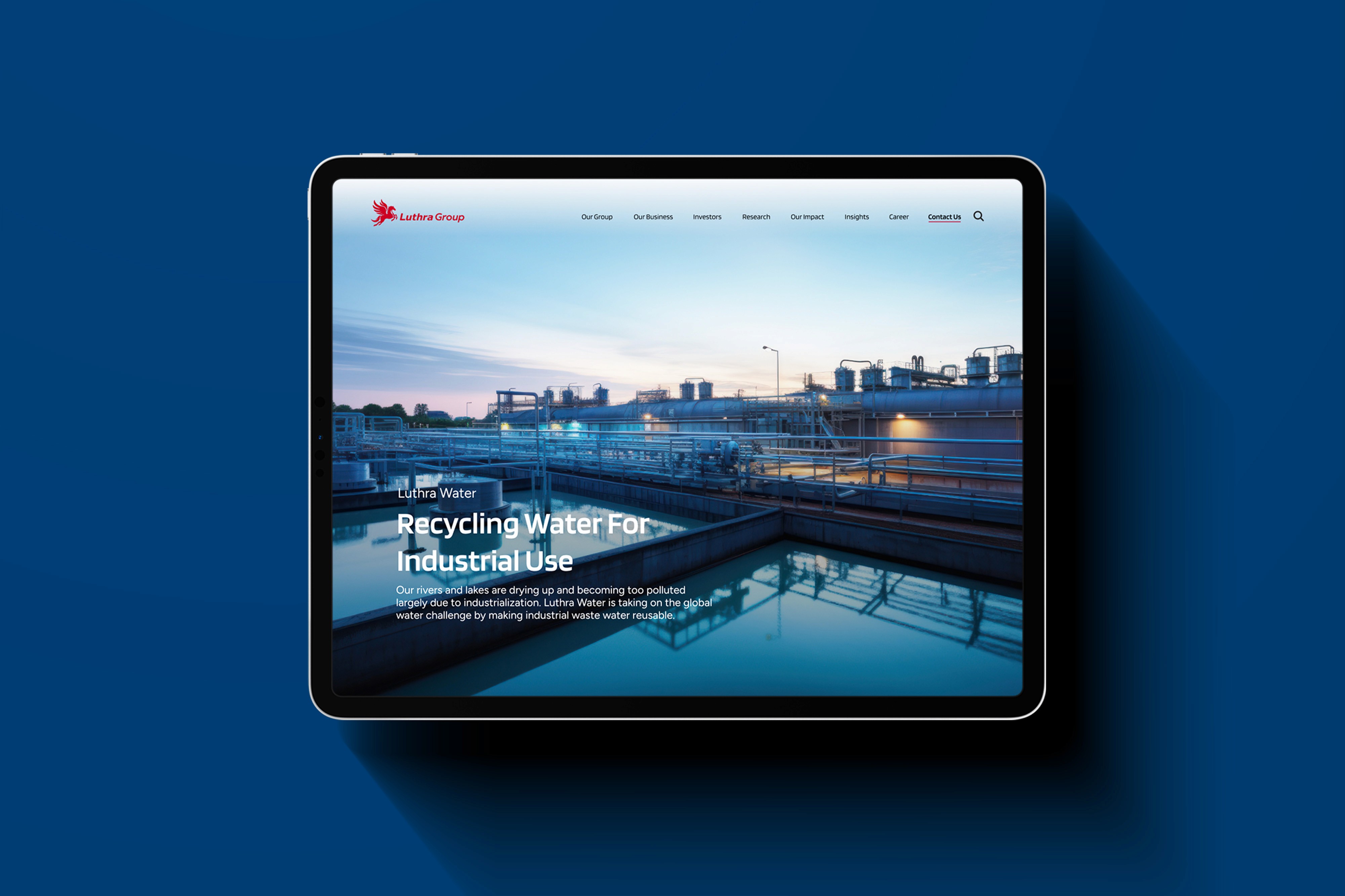
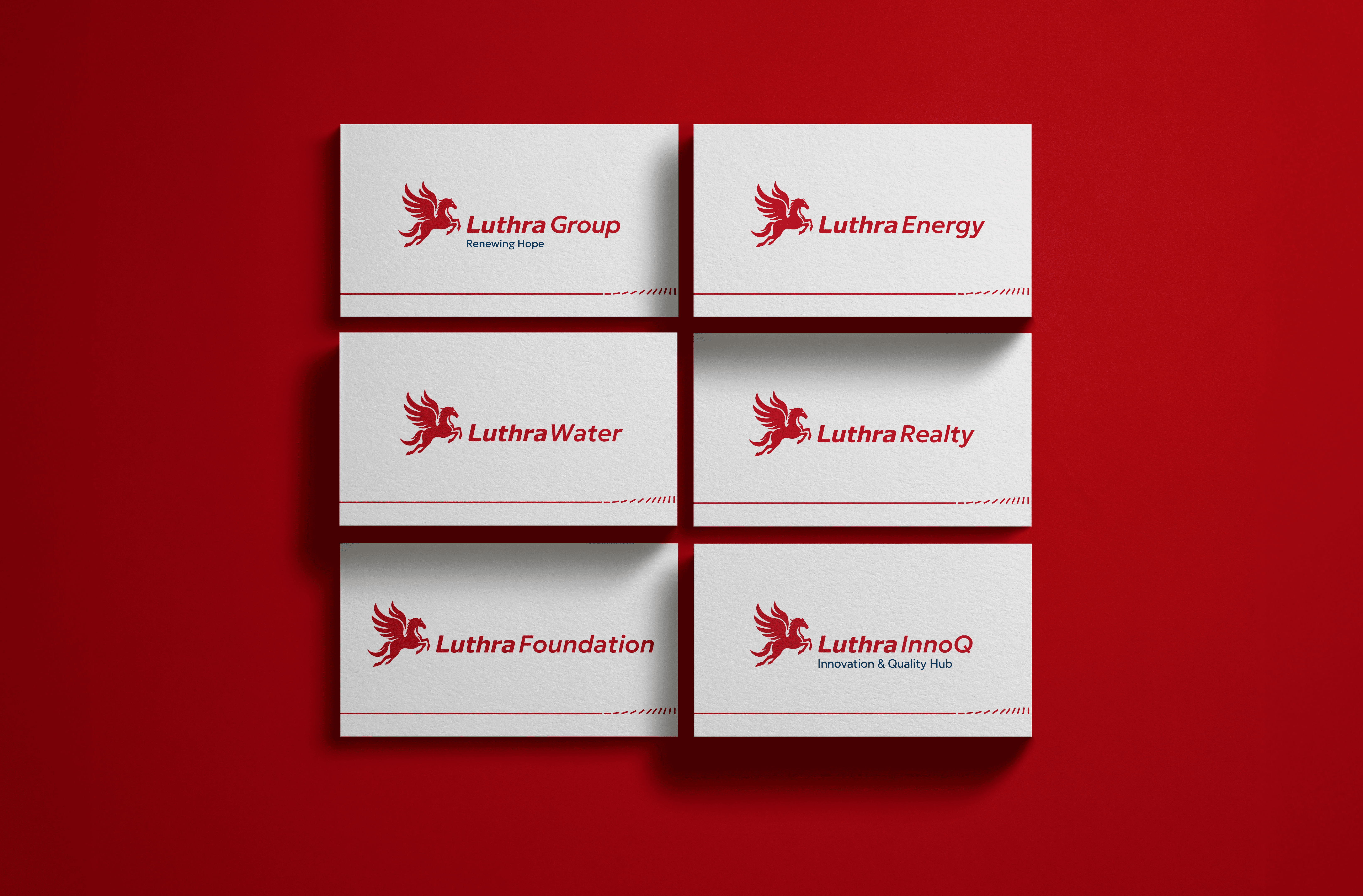
The brand architecture was reorganised around three clear sectors, Energy, Water and Realty, each operating as a focused business, yet all anchored to the same purpose-led narrative. This ensured differentiation in the market without dilution at the Group level.
Design Intelligence was then applied to move from strategy to visual brief:
■ The Group brand articulated why Luthra exists
■ Operating companies expressed how that purpose is delivered
■ Service brands like Luthra InnoQ made innovation and quality visible
■ Internal platforms such as Pegasus Club carried the culture forward
■ The Luthra Foundation embodied “Renewing Hope” through social action
Voice consistency across platforms, the identity, messaging, digital and internal communication, ensured that the positioning clearly understood and repeatable.
In this way, Renewing Hope became the connective tissue, binding strategy, structure, culture and communication into one coherent brand system.
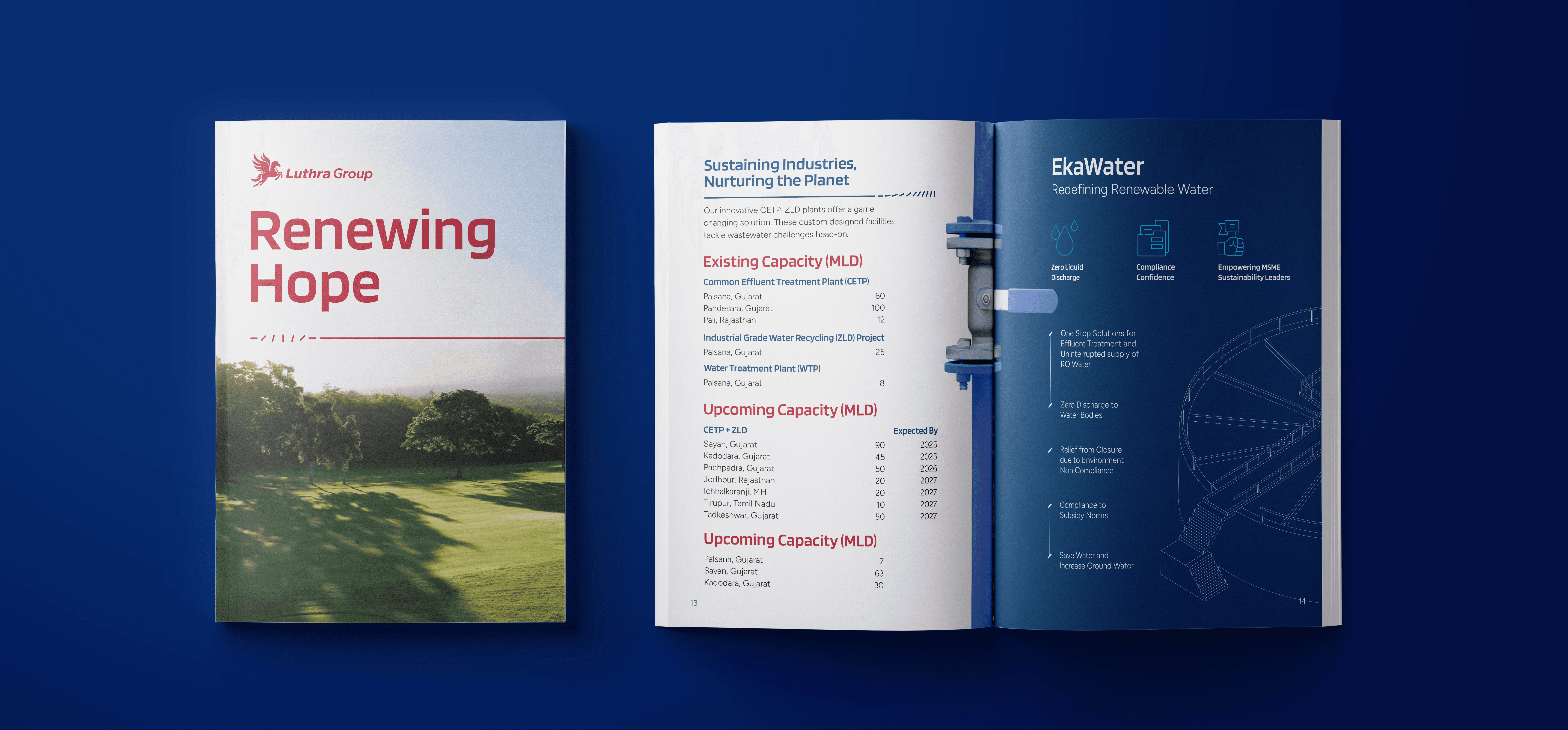

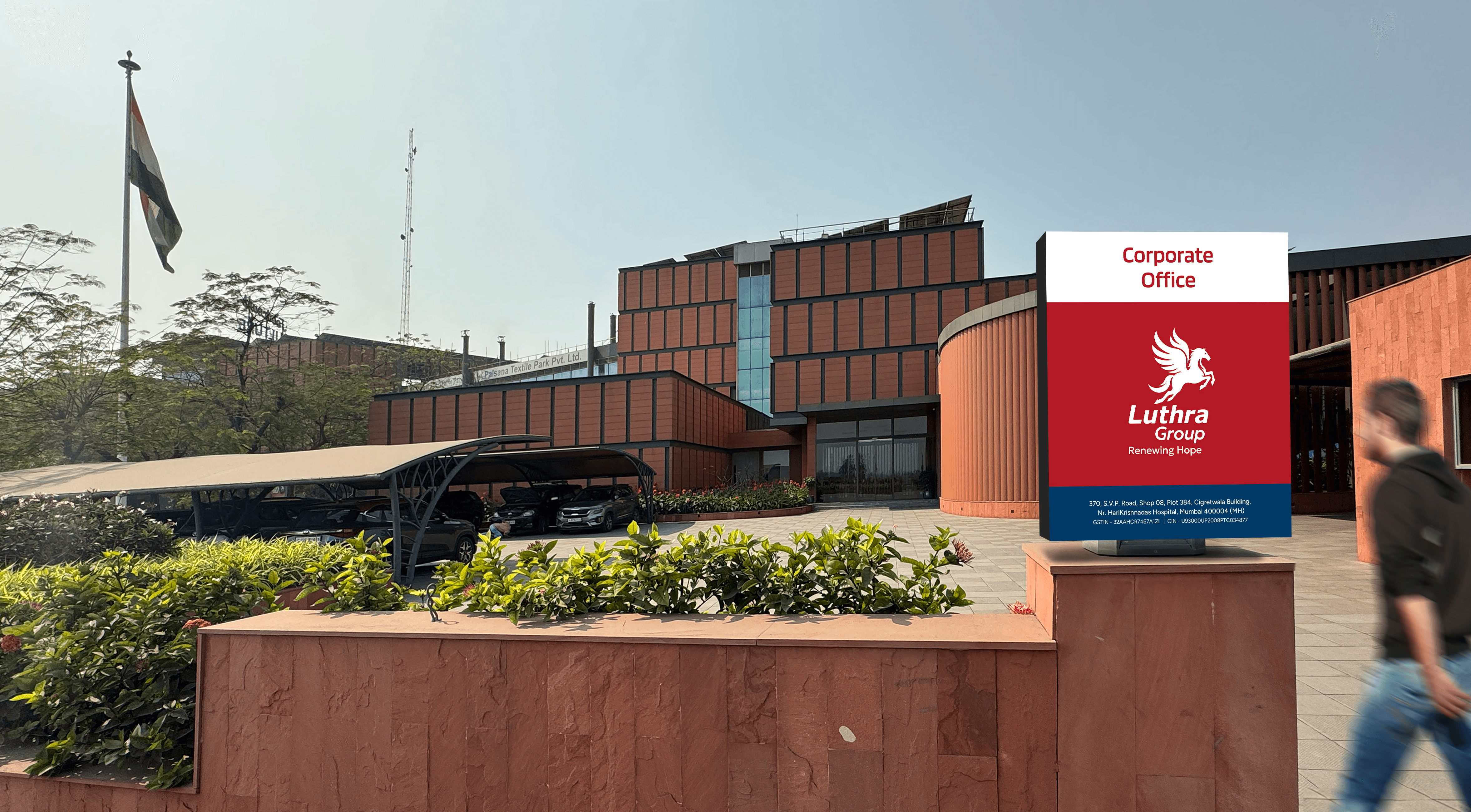
The rebranding delivered tangible strategic and business benefits for Luthra Group.
Business & Organisational Impact
■ Clear market positioning: The Group now presents itself as a unified, purpose-driven organisation rather than a collection of disconnected entities.
■ Stronger portfolio clarity: Clients, partners and stakeholders can easily understand how each business fits within the Group’s structure and ambition.
■ Improved differentiation: Purpose and sector focus enabled sharper conversations in competitive markets, especially across Energy and Water.
■ Scalable brand system: The architecture allows new businesses and initiatives to be added without confusion or rework.
Tangible returns included
■ Reduced brand overlap and inconsistency across subsidiaries
■ A clear framework for launching new services and innovations
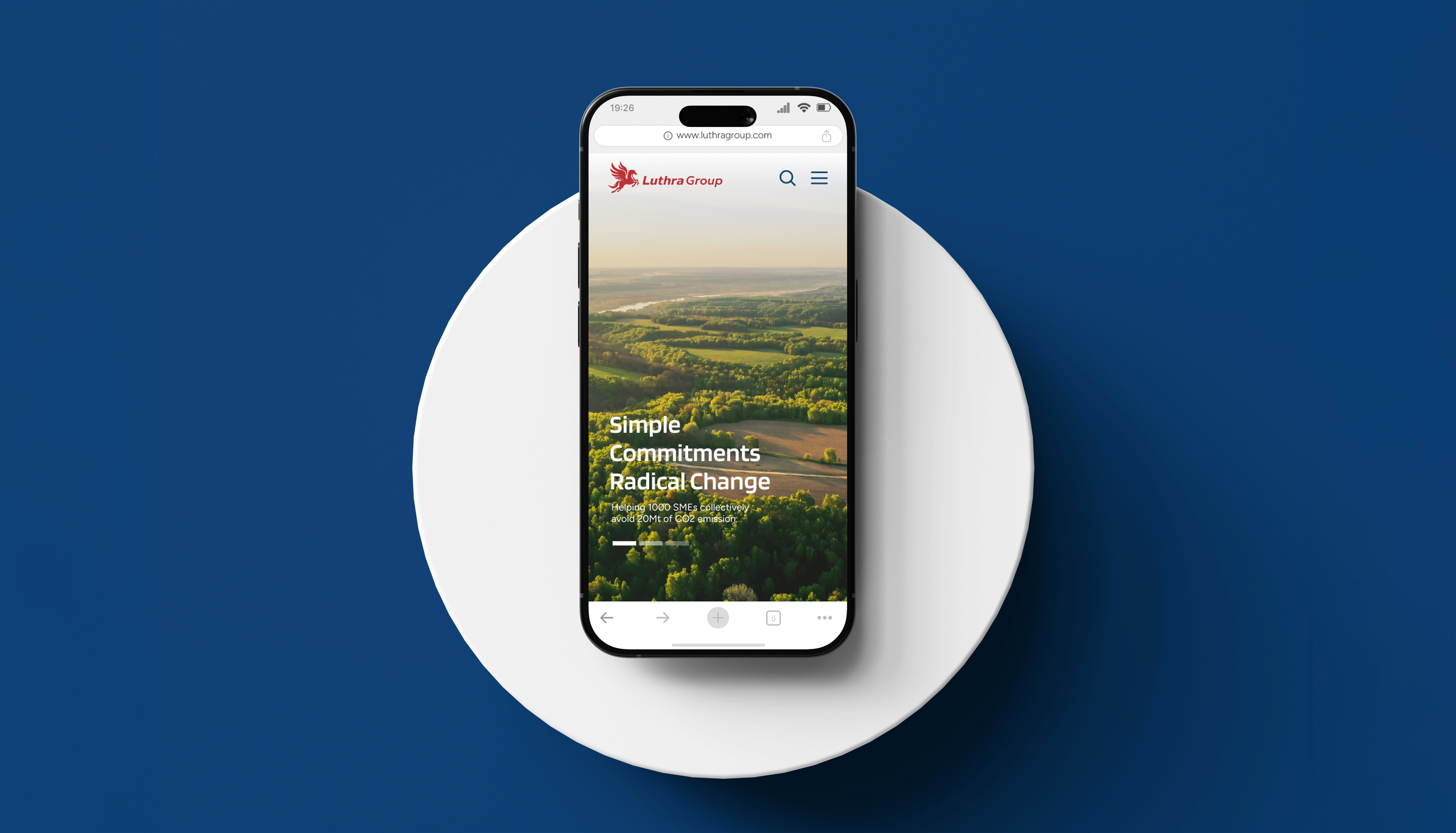
■ Stronger coherence across digital platforms, proposals and stakeholder communications
Intangible returns included
■ Increased leadership confidence in representing the Group externally
■ Stronger internal alignment and pride across teams
■ A shared narrative that links growth, innovation and responsibility
This project demonstrates that brand strategy is most effective when built on business alignment. The resulting brand architecture aligned purpose, structure and identity, bringing clarity internally and credibility externally as the Group expanded.