Through thoughtful visitor journey design and modular exhibition systems, the project fostered deep public engagement, cultural dialogue and national pride.
Film Heritage Foundation
Art & Culture
Visitor Experience
Visitor Experience Centers
Display Structures
Lighting Strategy & Design
Audio Visual Strategy & Design
Audio Visual Integration Supervision
Environment Graphics
Films & Audio-Visuals
Museums & Exhibit Design
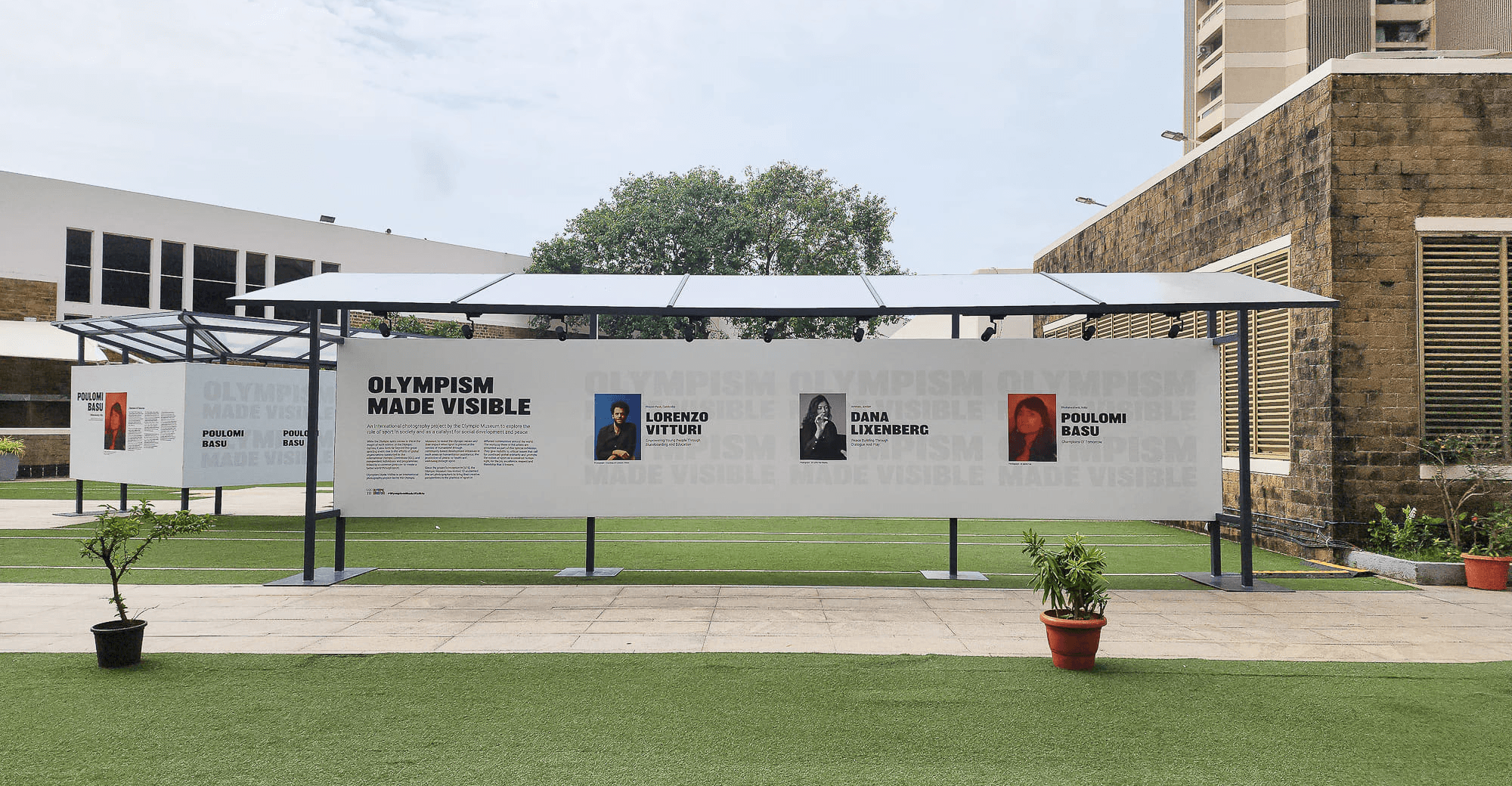
The Film Heritage Foundation set out to present Olympism Made Visible, which was to be a landmark exhibition that captured the Olympic spirit through photography, film and human stories from across the world.
The ambition was twofold:
To create a powerful, narrative-driven exhibition that honoured Olympism as a cultural and human ideal
To deliver the exhibition within an open public setting, without compromising visitor experience, curatorial integrity or the safety of rare photographic works
The exhibition needed to be emotionally resonant, logistically robust and capable of bringing together diverse voices of photographers, Olympians, cultural institutions and the public into one coherent experience.
EuMo was engaged to translate this ambition into an intelligently designed exhibition system that could perform under real-world constraints.
The challenge was curation and execution under complexity.
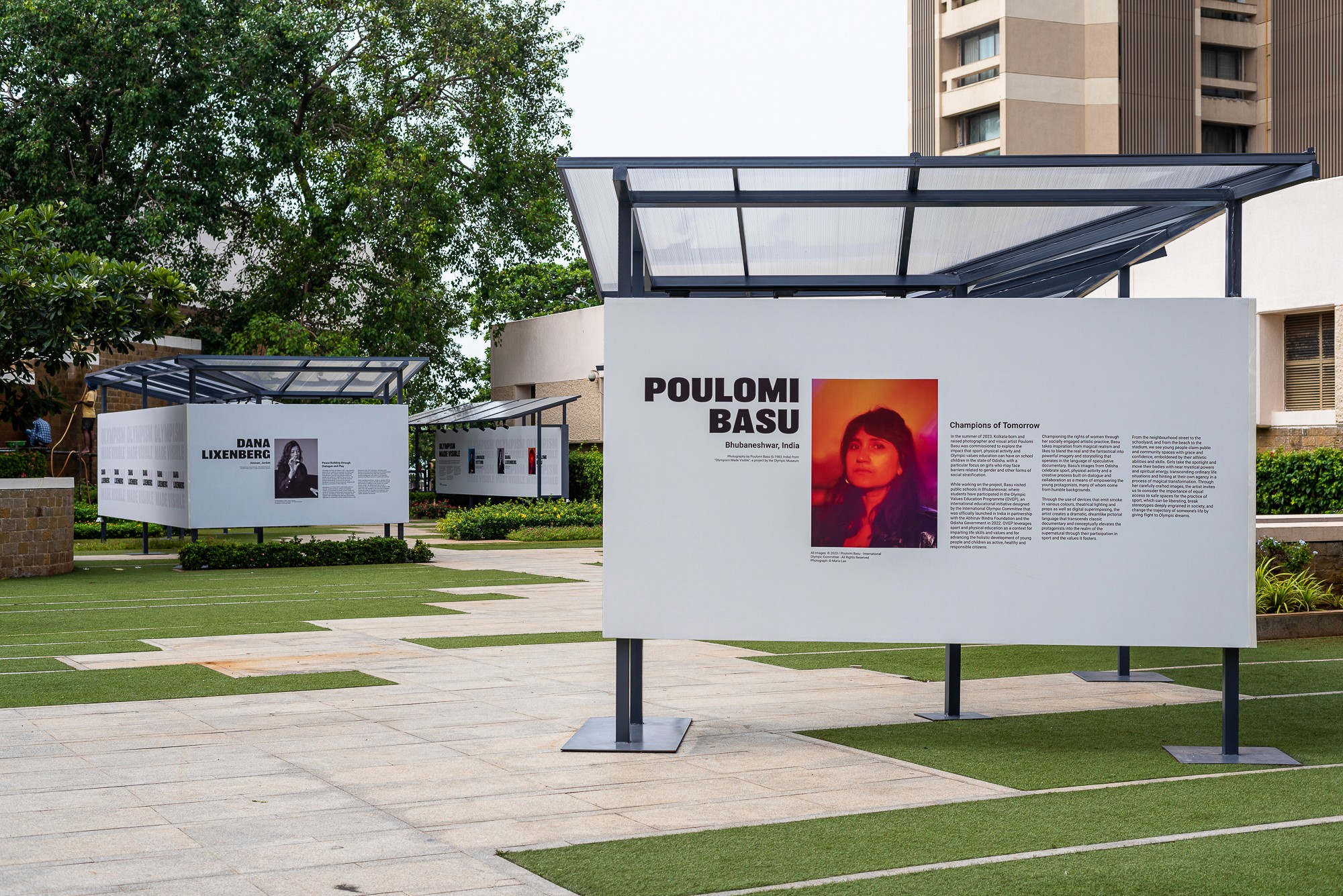
Hosting an open-air exhibition during peak monsoon introduced environmental risk, operational pressure, and coordination challenges across multiple stakeholders. At the same time, the works of internationally renowned photographers needed to be displayed uniformly yet distinctively, without flattening their individual narratives.
The defining insight was clear —
A strong exhibition system must protect content, guide movement and amplify narrative, simultaneously.
EuMo approached the project through the principles of effective exhibition design, focusing on structure, flow and resilient design.
Our Design Intelligence framework was applied through
■ Narrative-driven exhibition planning, where each photographer’s work functioned as a chapter within a larger Olympism story
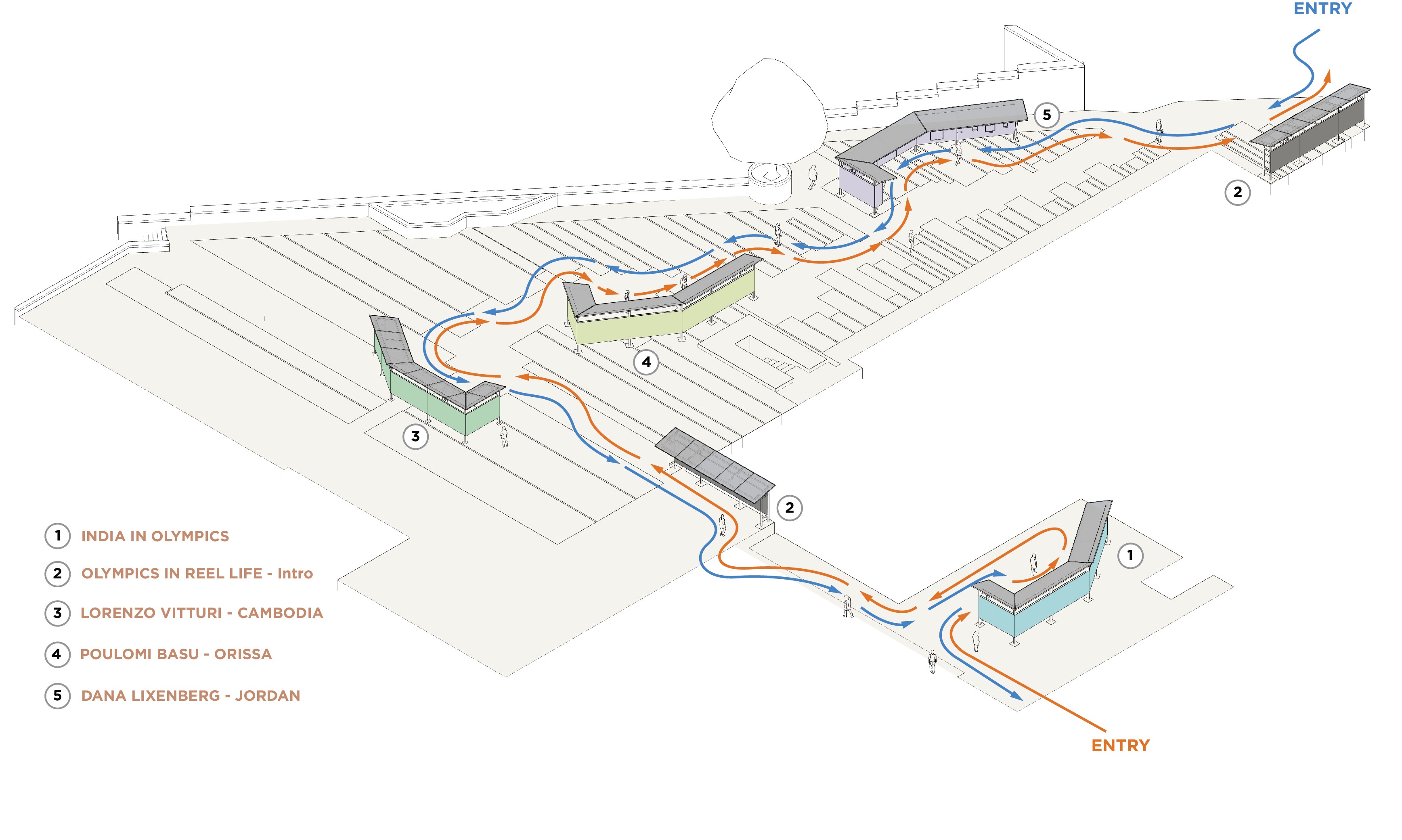
■ Visitor journey mapping, ensuring intuitive movement across the exhibition while allowing moments of pause and reflection
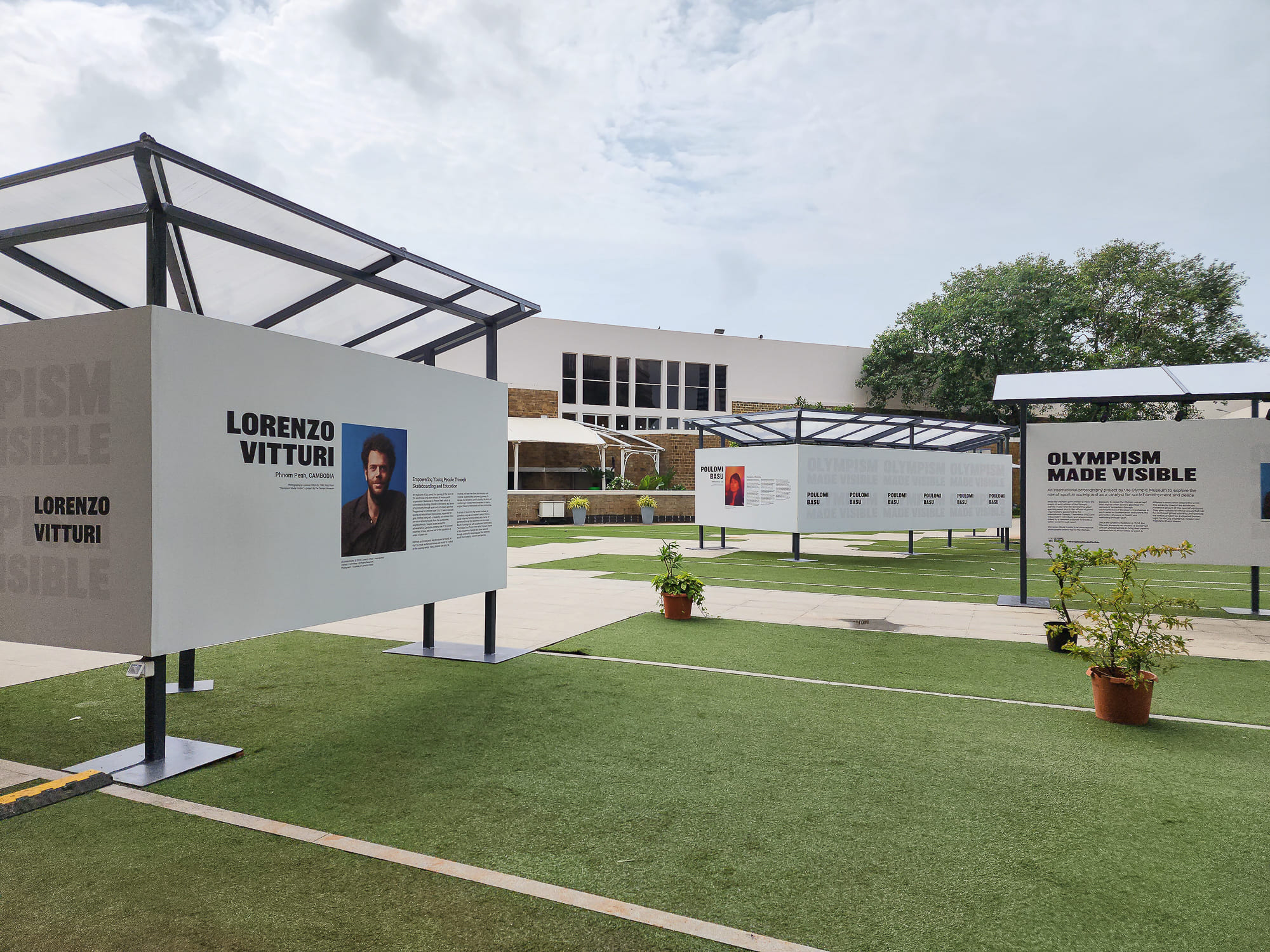
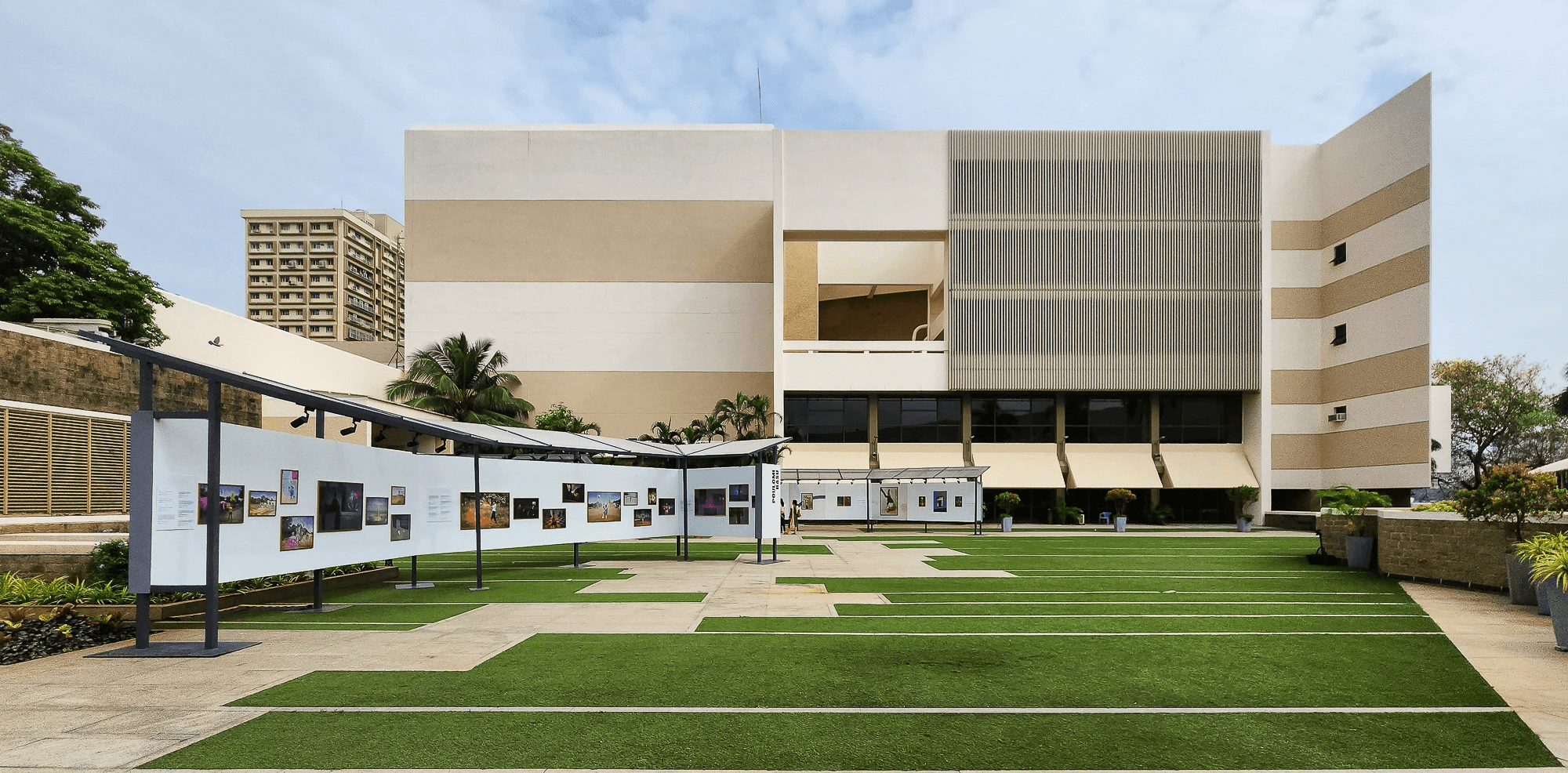
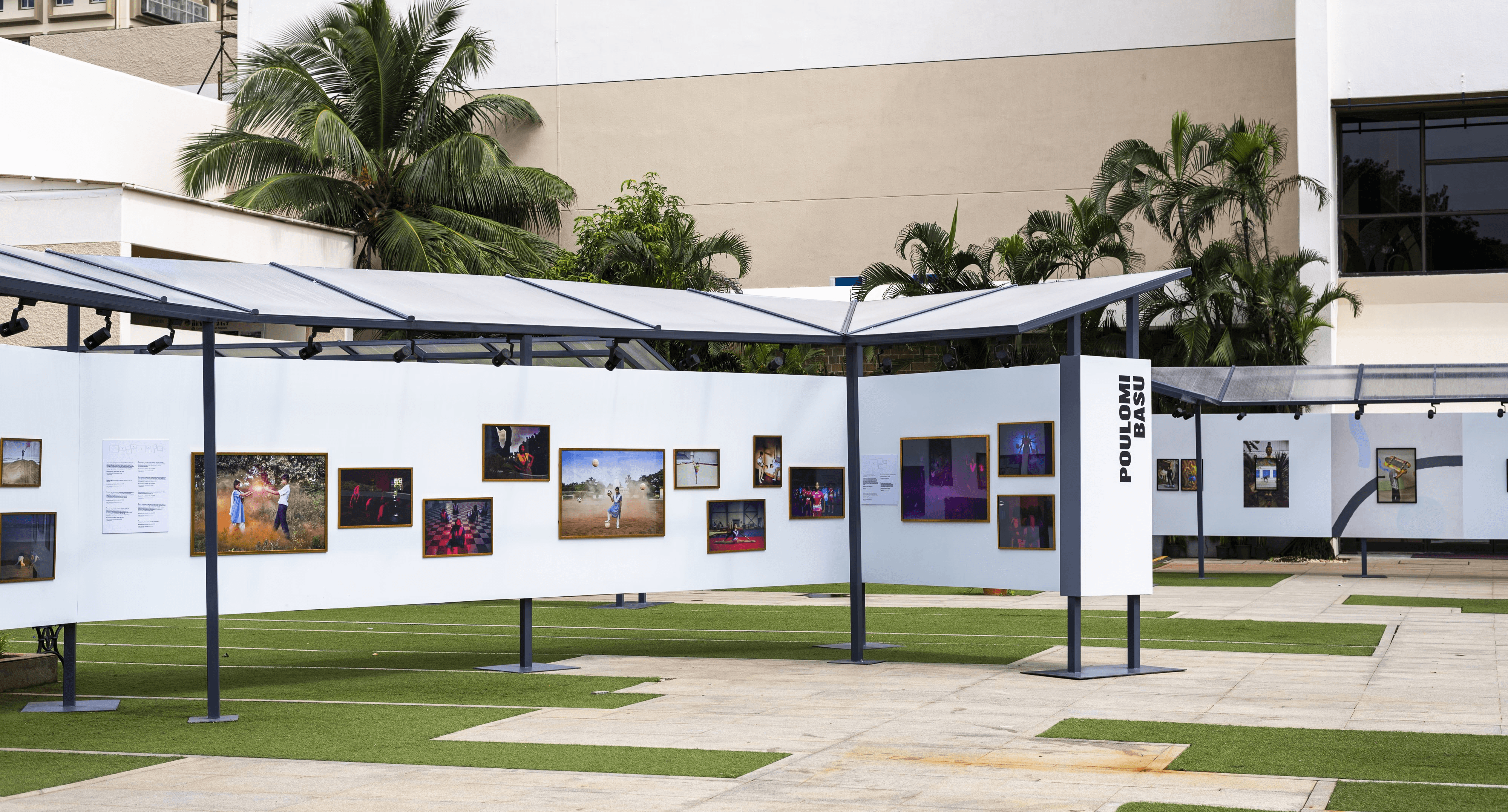
■ Exhibition layout planning and flow, designed as a constellation of islands that read individually yet formed a cohesive whole
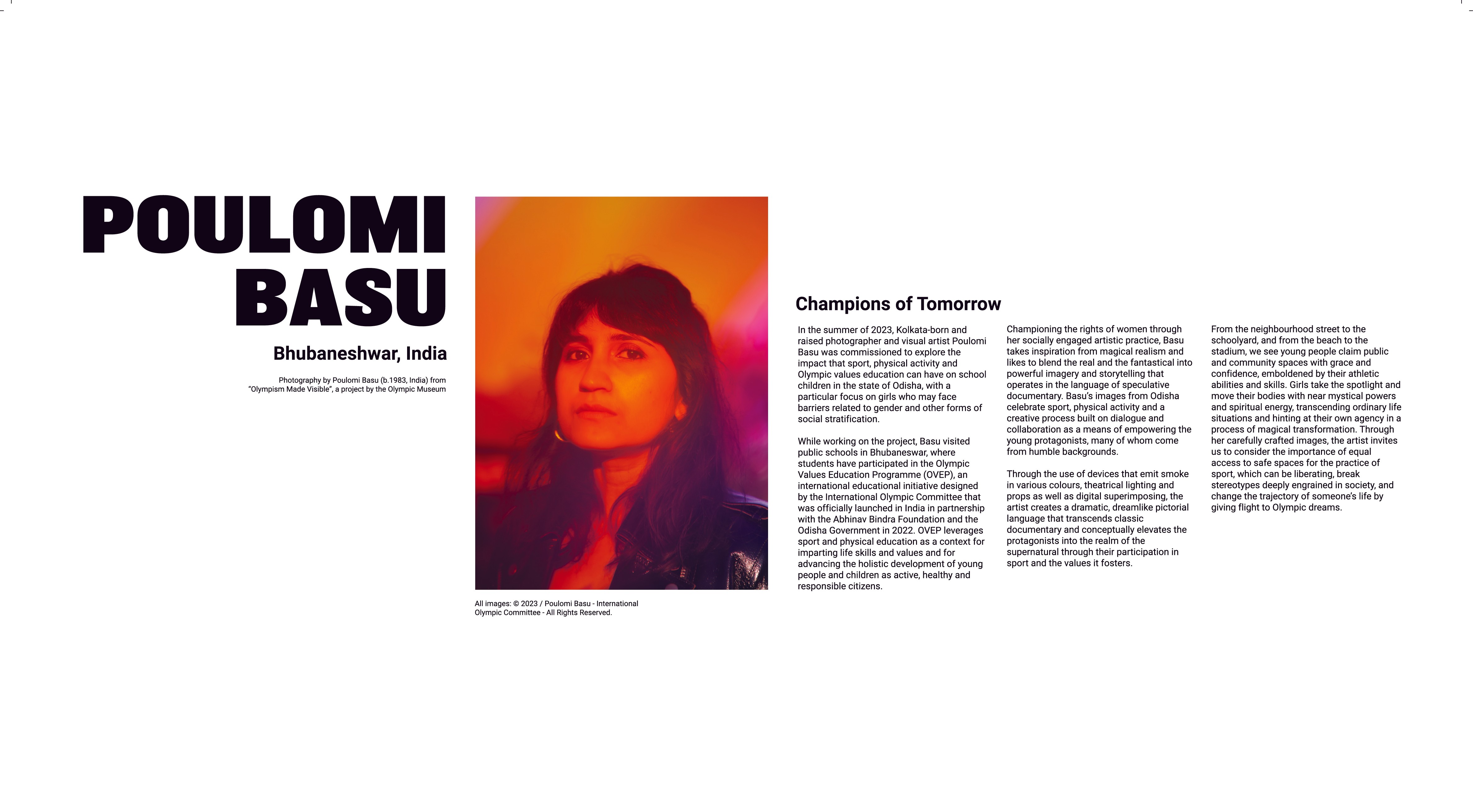
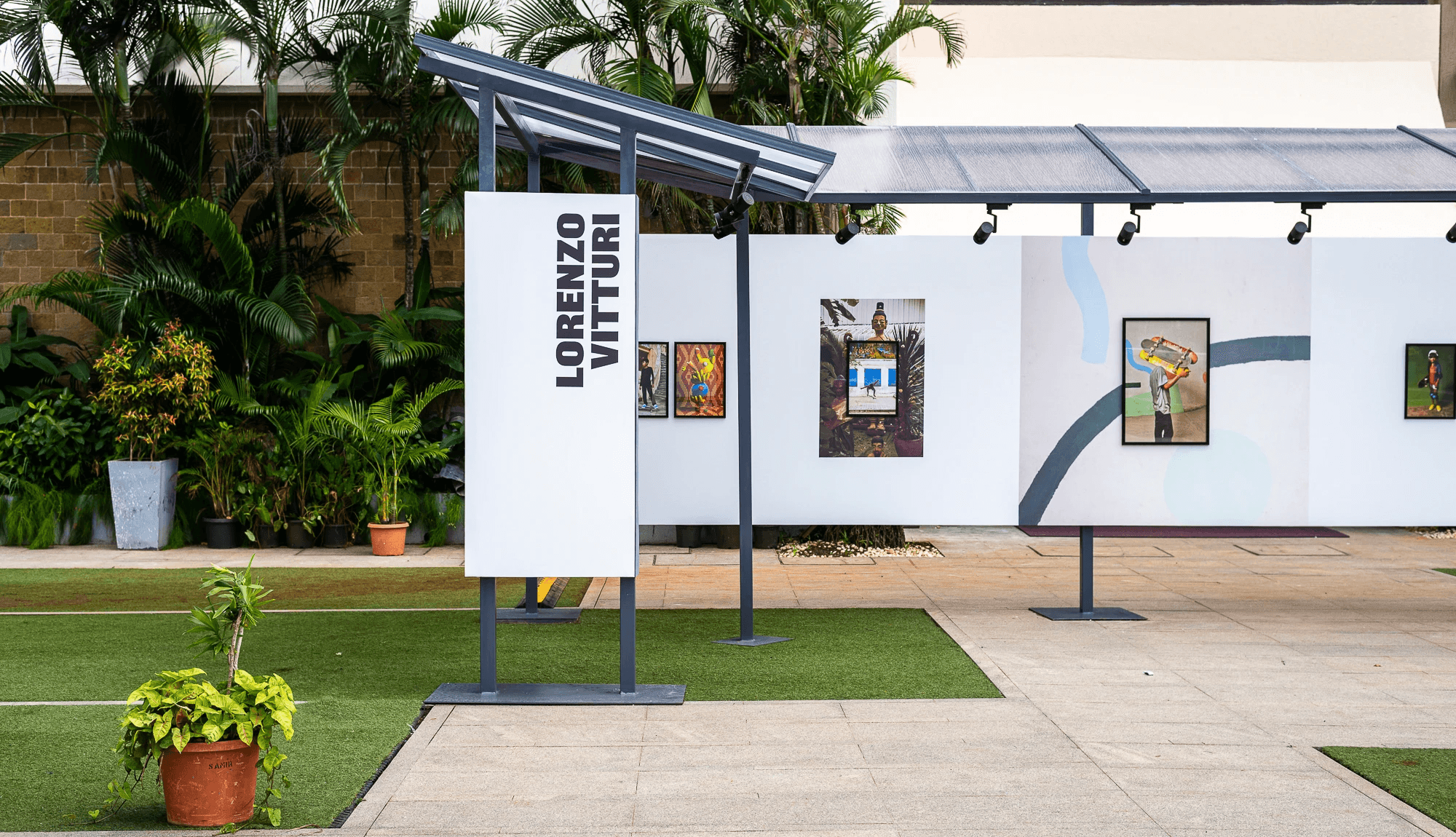
■ Modular and scalable exhibit systems, with each photographer represented through a repeatable graphic module
■ Weather-resilient design, using extended poly-roofing to protect artefacts and visitors without enclosing the experience
■ Lighting strategies for exhibitions, where each module was lit as a self-contained island, maintaining visual focus despite environmental conditions
Each unit housed carefully curated photographic narratives, allowing individual voices to remain distinct while contributing to a collective Olympic ethos, mirroring Olympism itself.
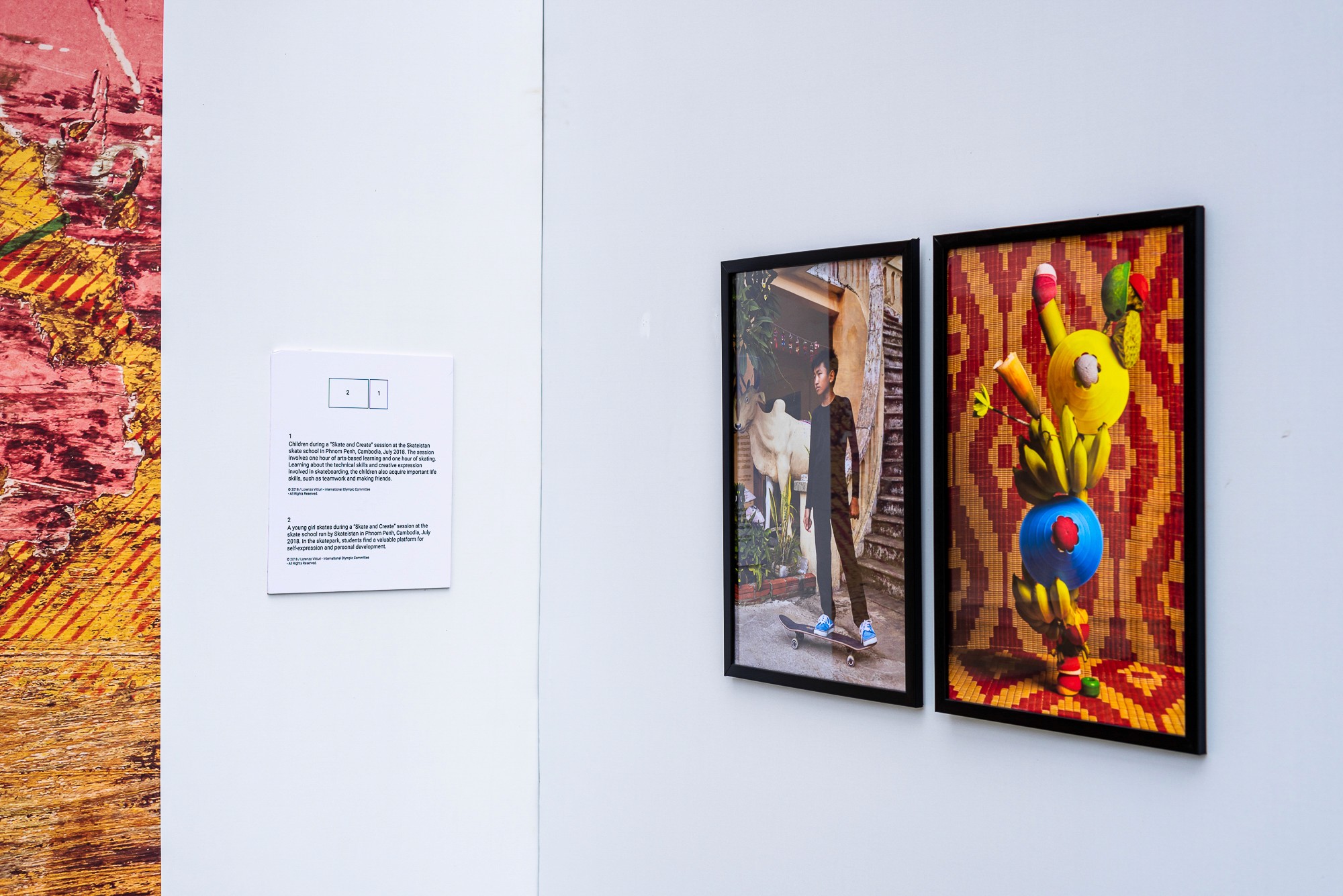
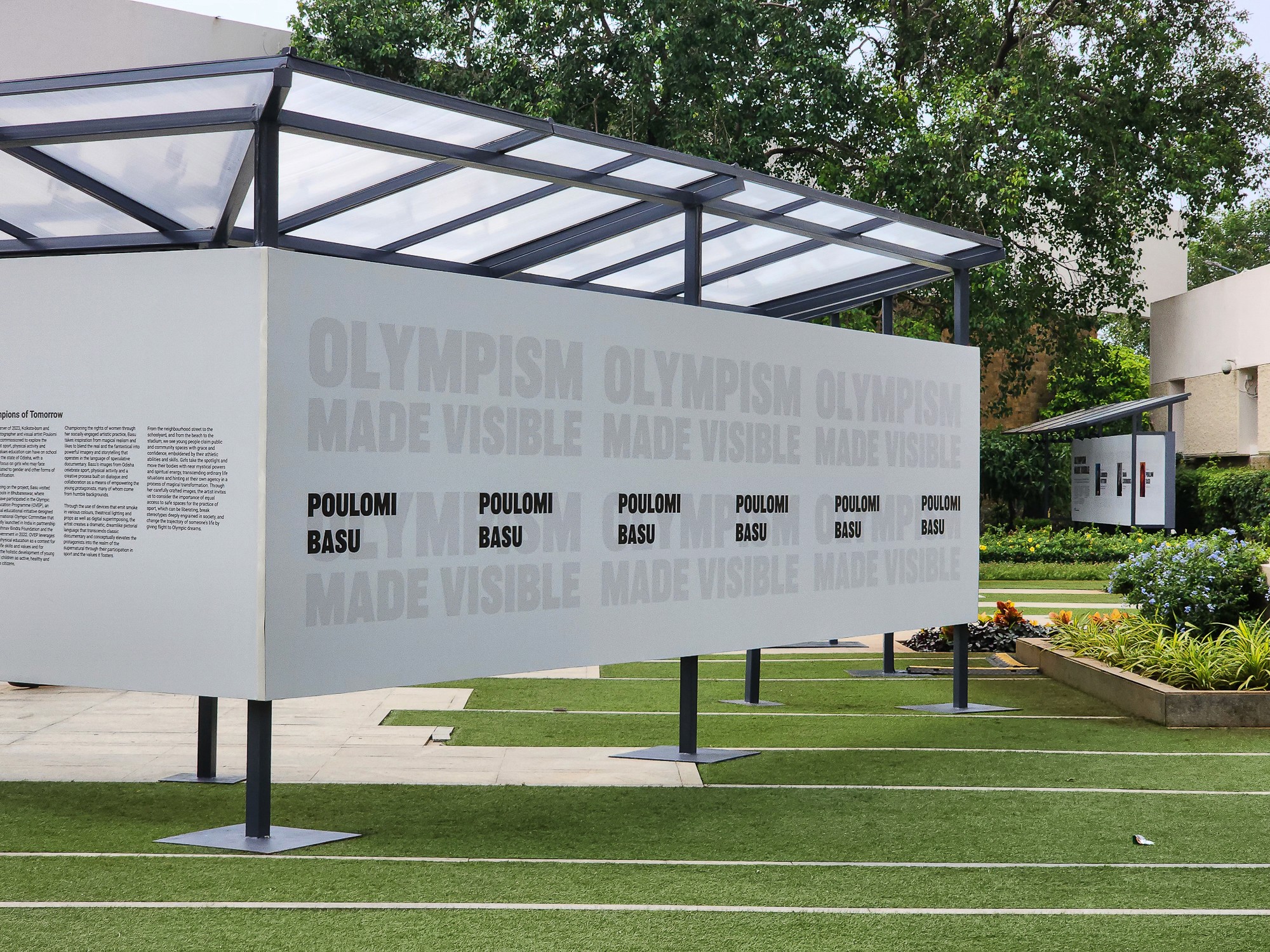
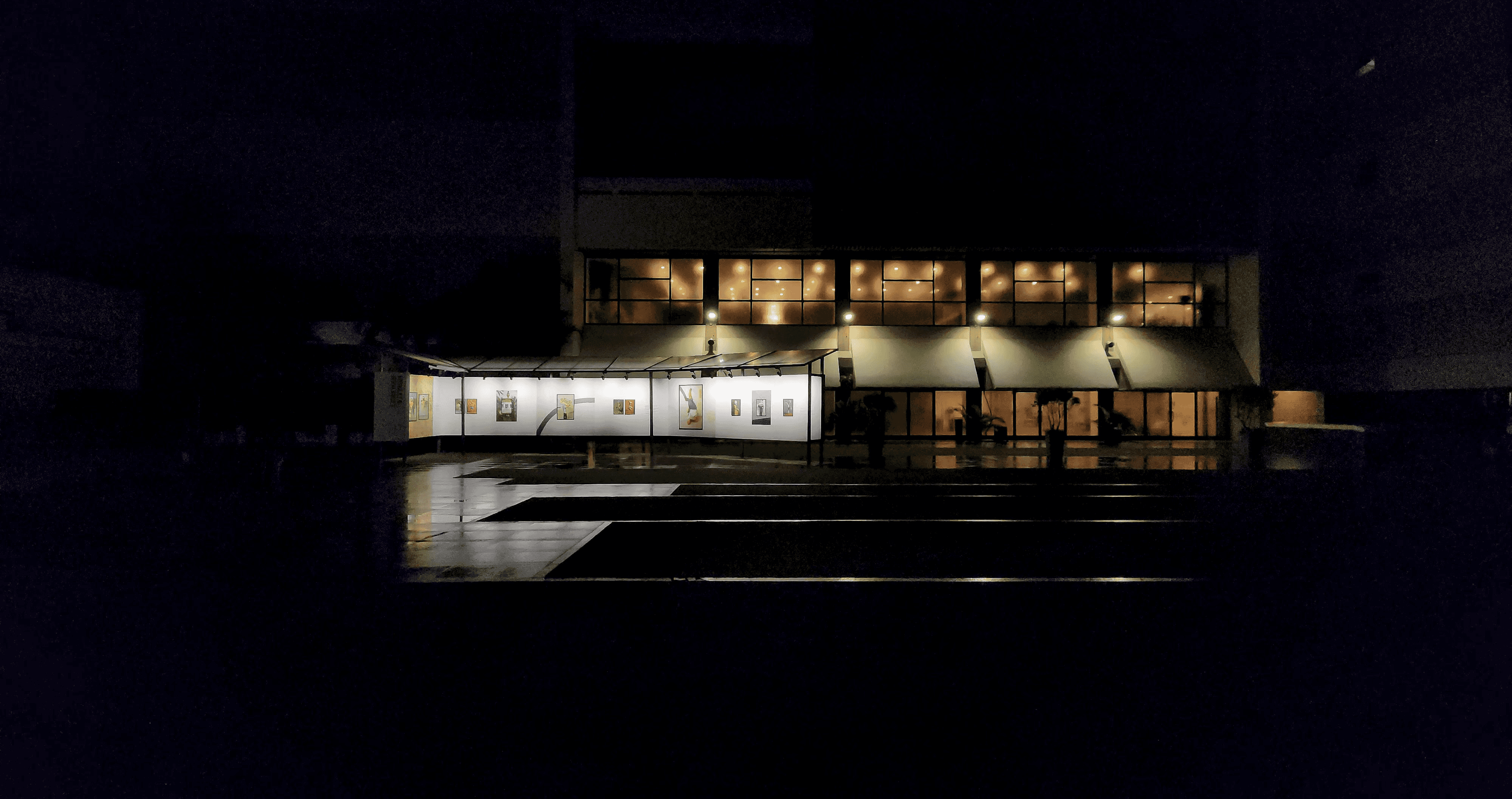
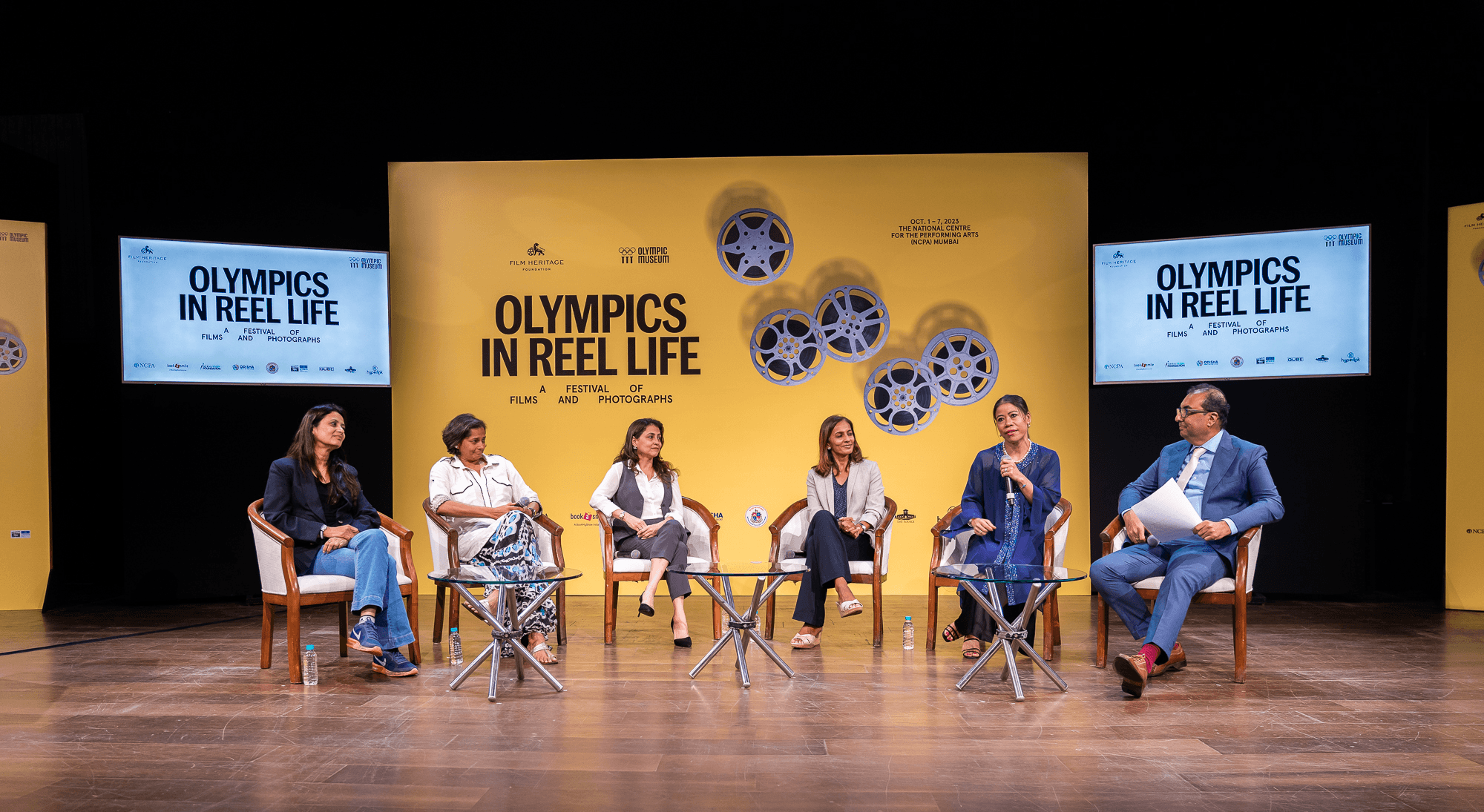
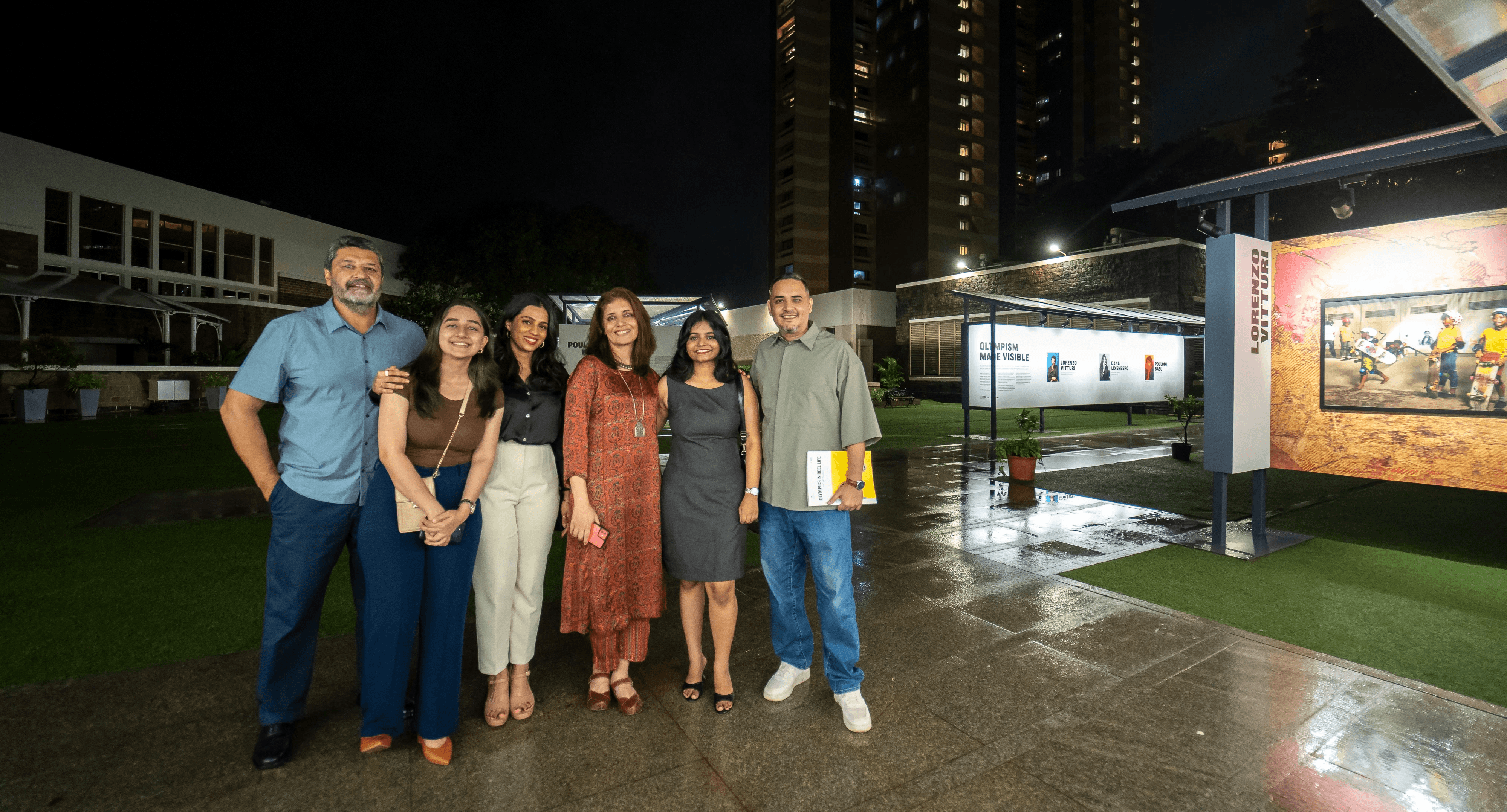
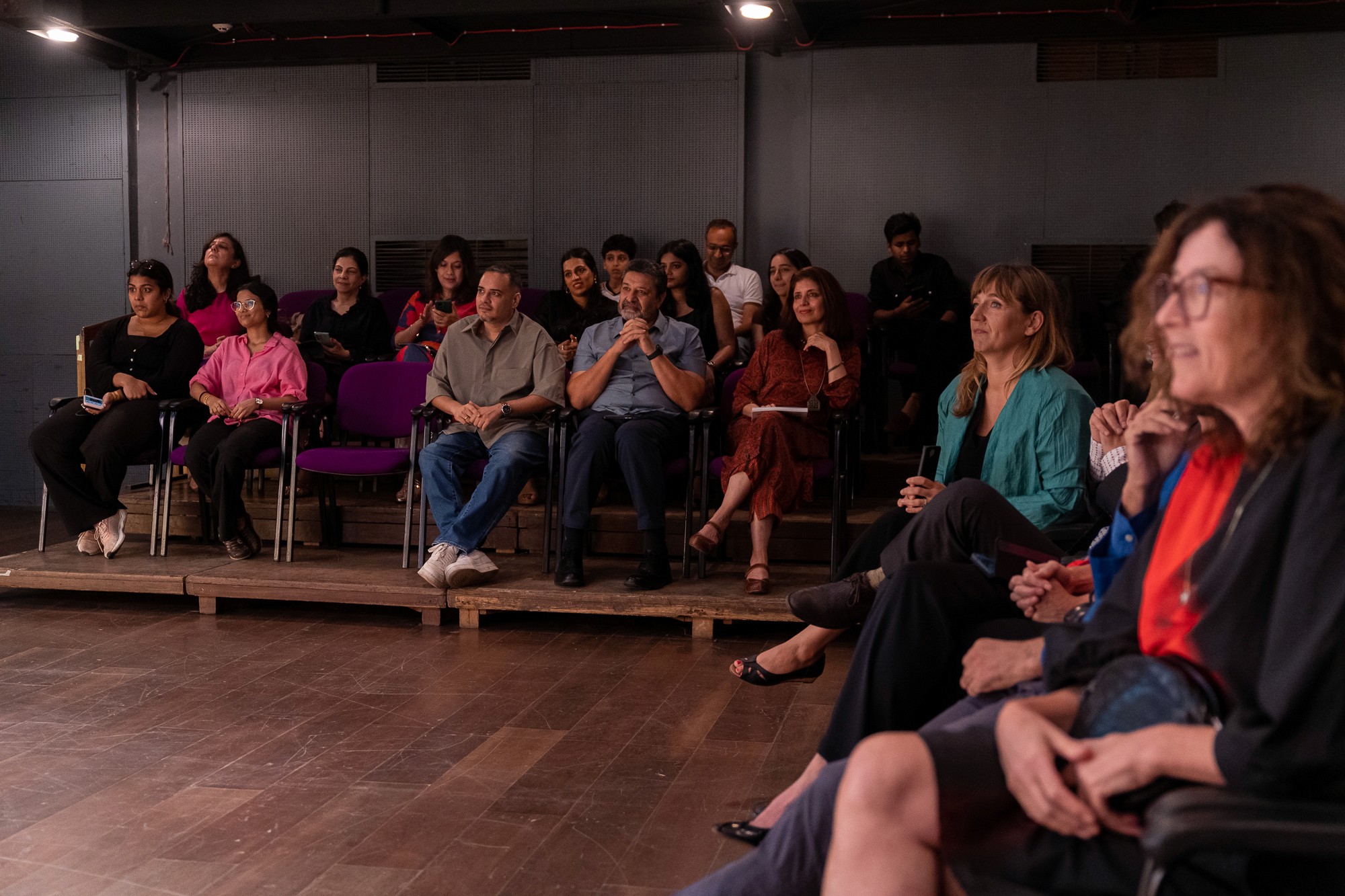
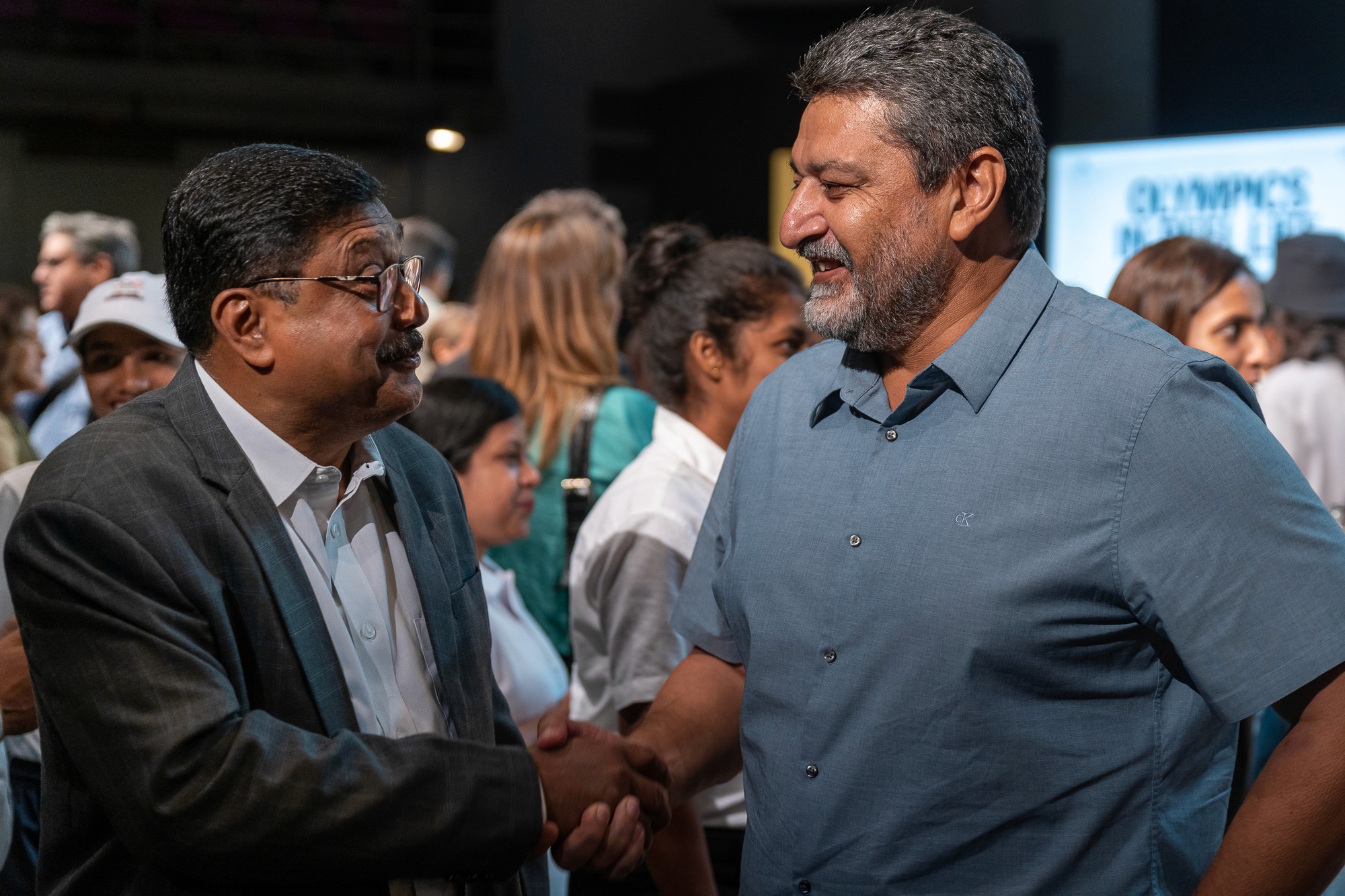
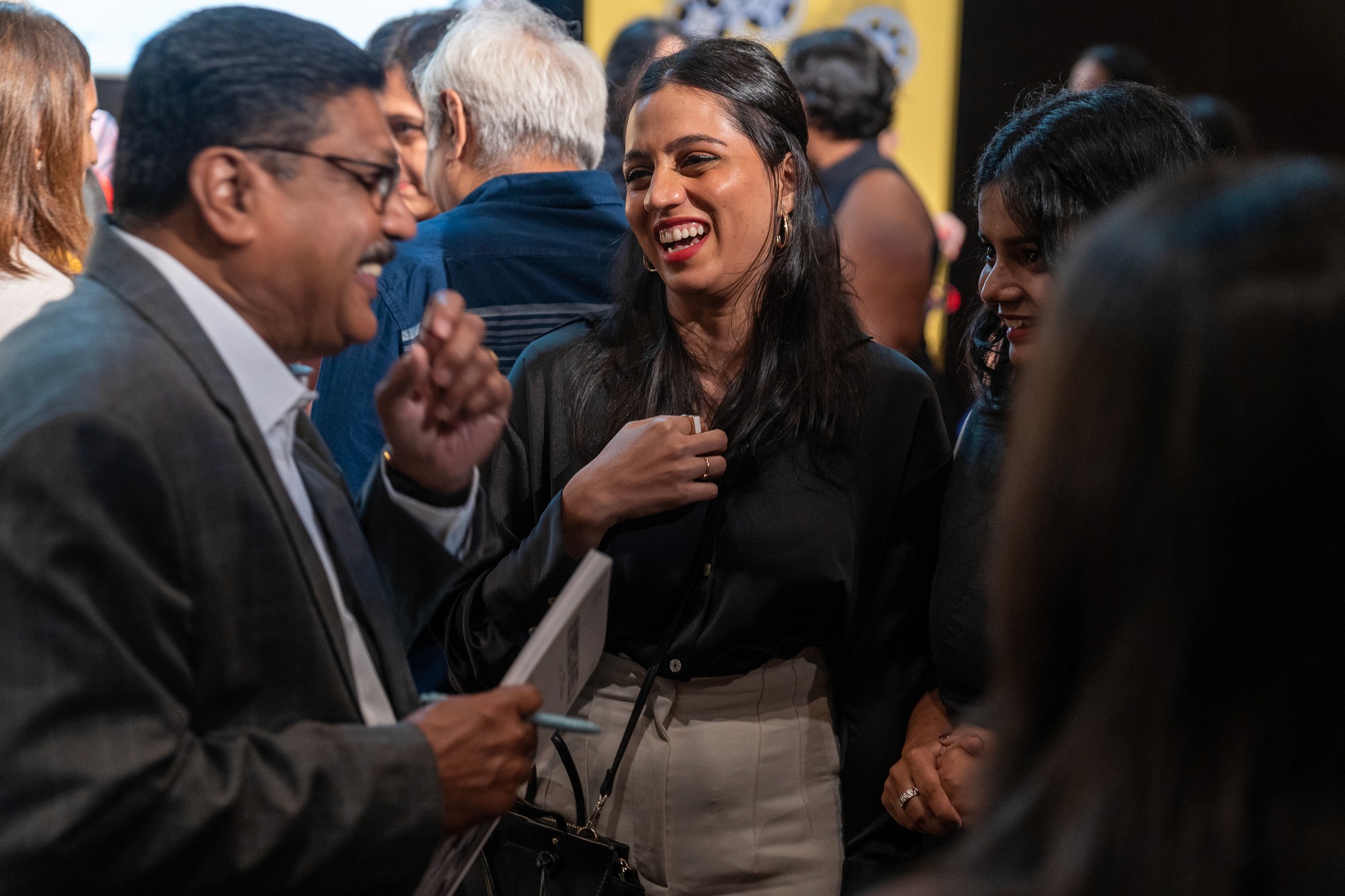
The exhibition succeeded in engaging a wide and diverse cross-section of Mumbai’s cultural diaspora: photographers, filmmakers, students, sports enthusiasts, Olympians, and members of the wider public. By situating the exhibition in an open, accessible setting, it invited spontaneous participation and curiosity, extending its reach well beyond a conventional gallery audience.
The presence of distinguished Olympians and cultural ambassadors transformed the exhibition into a living celebration of national sporting spirit. Their participation lent authenticity, helping reinforce Olympism as a global movement and a value system built on resilience and collective aspiration.
Media coverage across leading national publications amplified the exhibition’s reach, ensuring the stories and ideals it represented travelled beyond the physical space and into public discourse.
In doing so, Olympism Made Visible aligned closely with broader national goals, celebrating excellence, perseverance, inclusivity, and cultural exchange, while demonstrating how thoughtfully designed public exhibitions can act as catalysts for collective inspiration.
EuMo’s work on Olympism Made Visible demonstrates how exhibition design can function as a catalyst for cultural connection.
By engaging artists, sports ambassadors, and the public in one shared narrative, the exhibition reinforced Olympism as a living set of values rather than a historical archive.