Through disciplined information design, graphic storytelling and responsible production, the publication strengthened ESG communication and enhanced corporate reputation to create a durable stakeholder engagement asset.
TATA Group
Cross-Sectoral
Brand Experience
Visual Identity Design
Brand World
Communication Strategy
Brand Collaterals
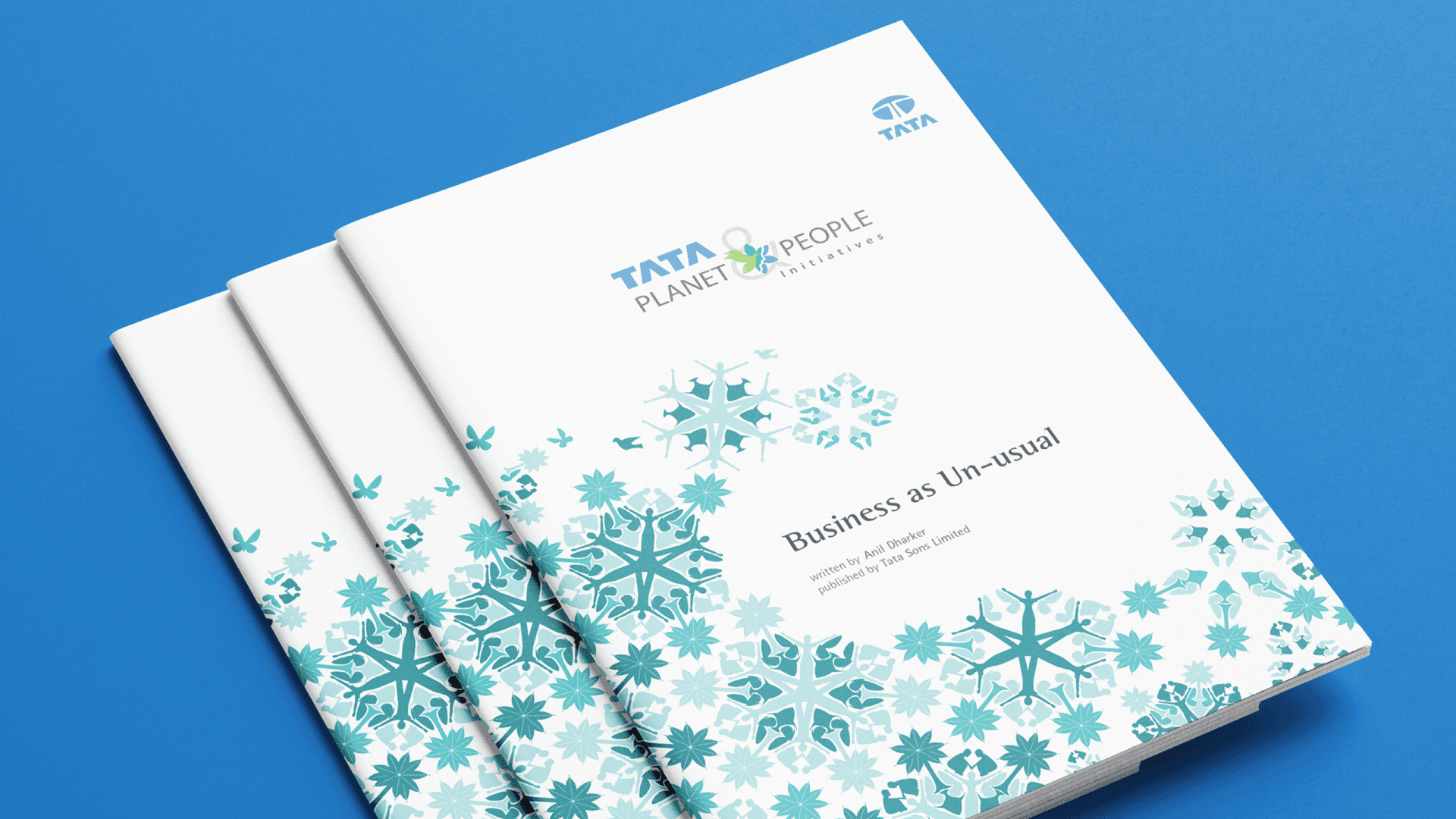
The Tata Group sought to consolidate and articulate its extensive social and environmental initiatives through a definitive publication titled Planet and People. Across Group companies, decades of work in conservation, community upliftment and sustainable development had remained understated.
The ambition was to
■ Showcase the scale and seriousness of Tata’s CSR commitment
■ Communicate impact across diverse sectors and geographies
■ Align sustainability efforts with corporate reputation
■ Create a durable documentation of institutional responsibility
Beyond compliance, this was an opportunity to elevate corporate responsibility into leadership narrative.
EuMo was engaged to structure and express this ambition with clarity and credibility.
The challenge was effective storytelling in the absence of cohesion.
The Tata Group’s CSR work included
■ Protection of natural habitats
■ Rural development initiatives
■ Support for marginalised communities
■ Environmental stewardship programmes
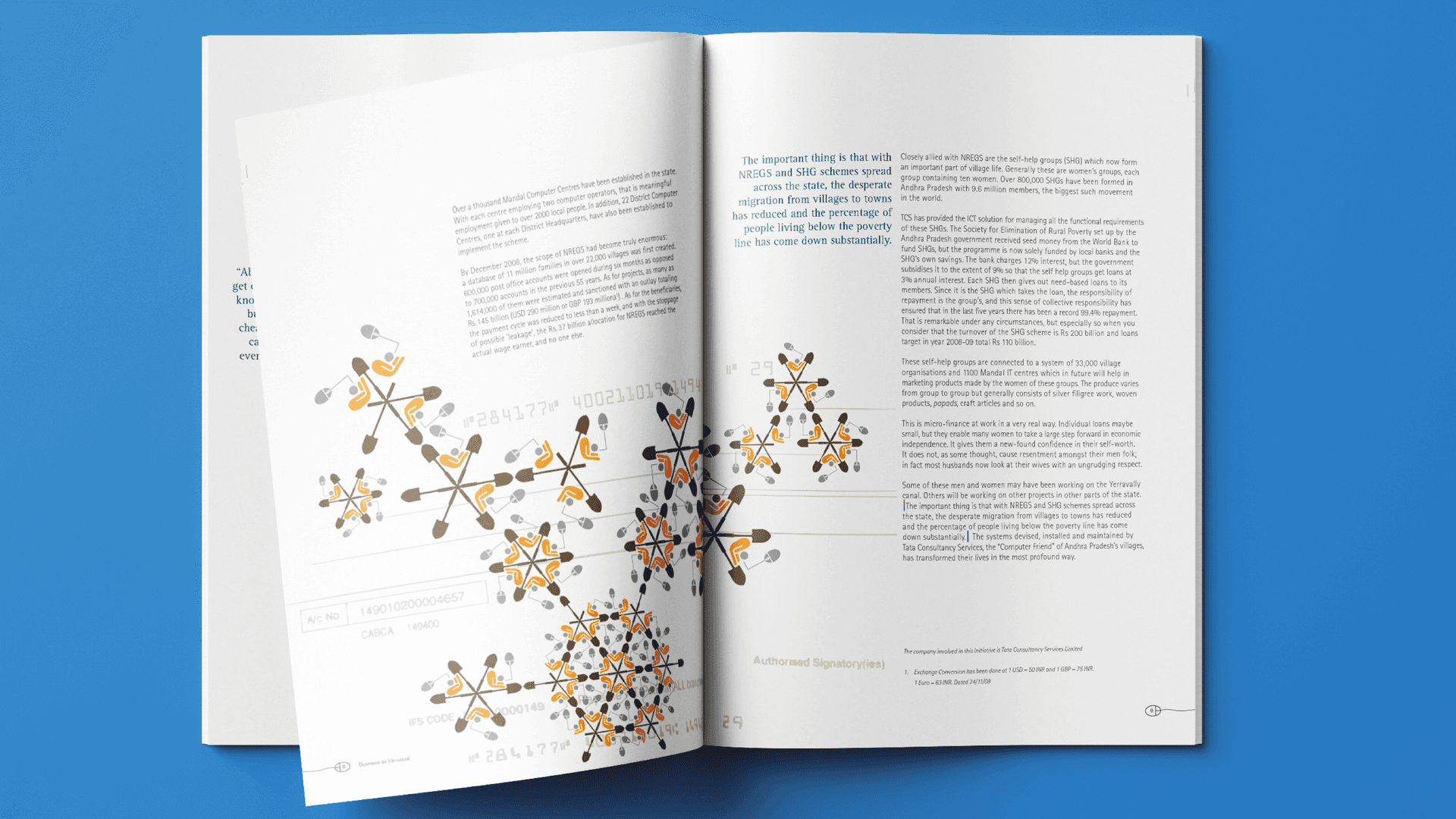
However documentation varied in quality and completeness. Photography was often low resolution and in some cases unavailable. The risk was that meaningful impact would appear fragmented or underrepresented.
The defining insight was clear
Corporate responsibility earns value when impact is made visible, structured and emotionally resonant.
EuMo approached the publication as an exercise in Design Intelligence rather than layout design.
Story Before Format
We worked closely with Tata teams and storytellers to distil complex initiatives into accessible narratives that preserved authenticity and depth.
Graphic Storytelling Structure
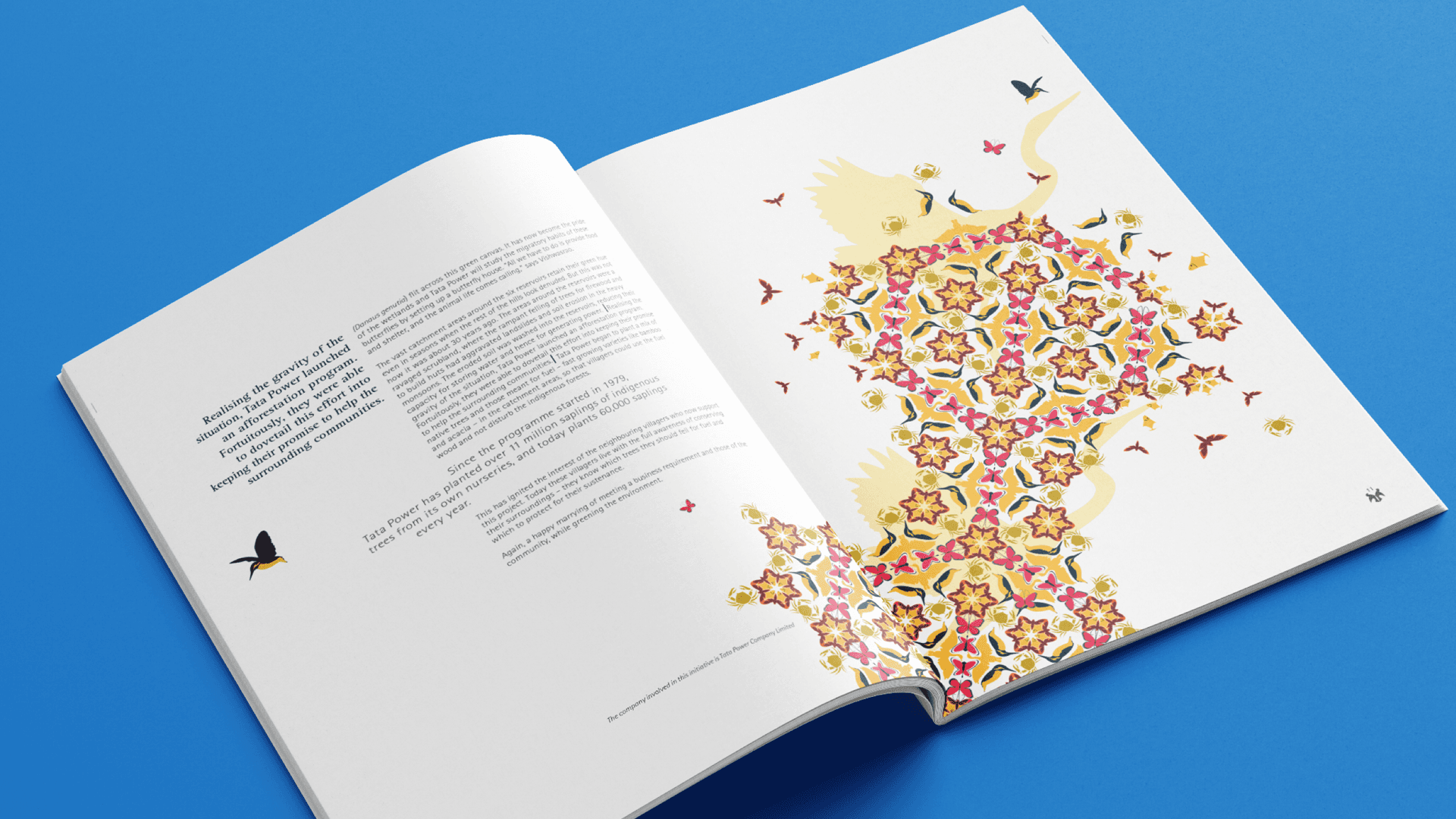
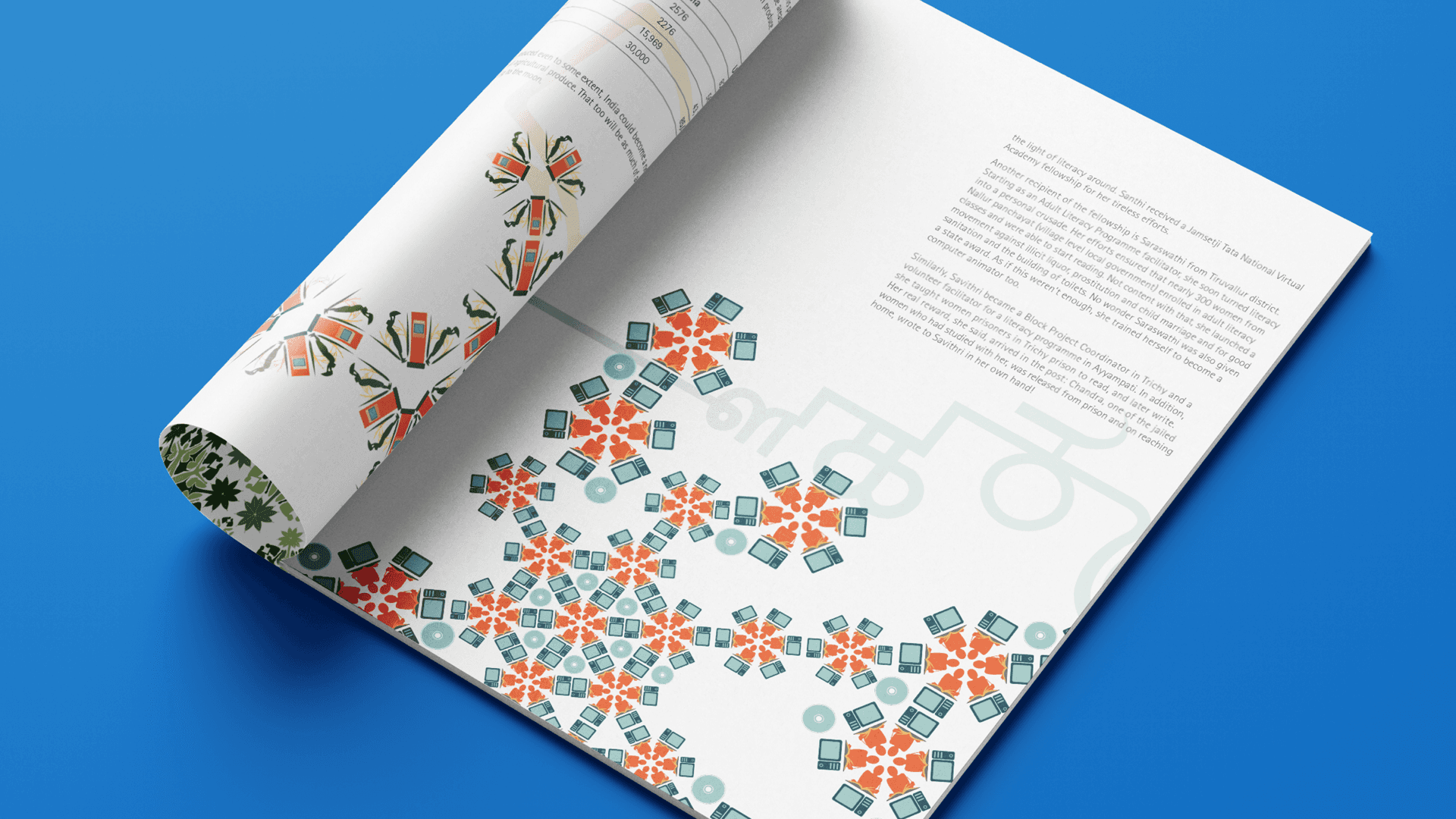
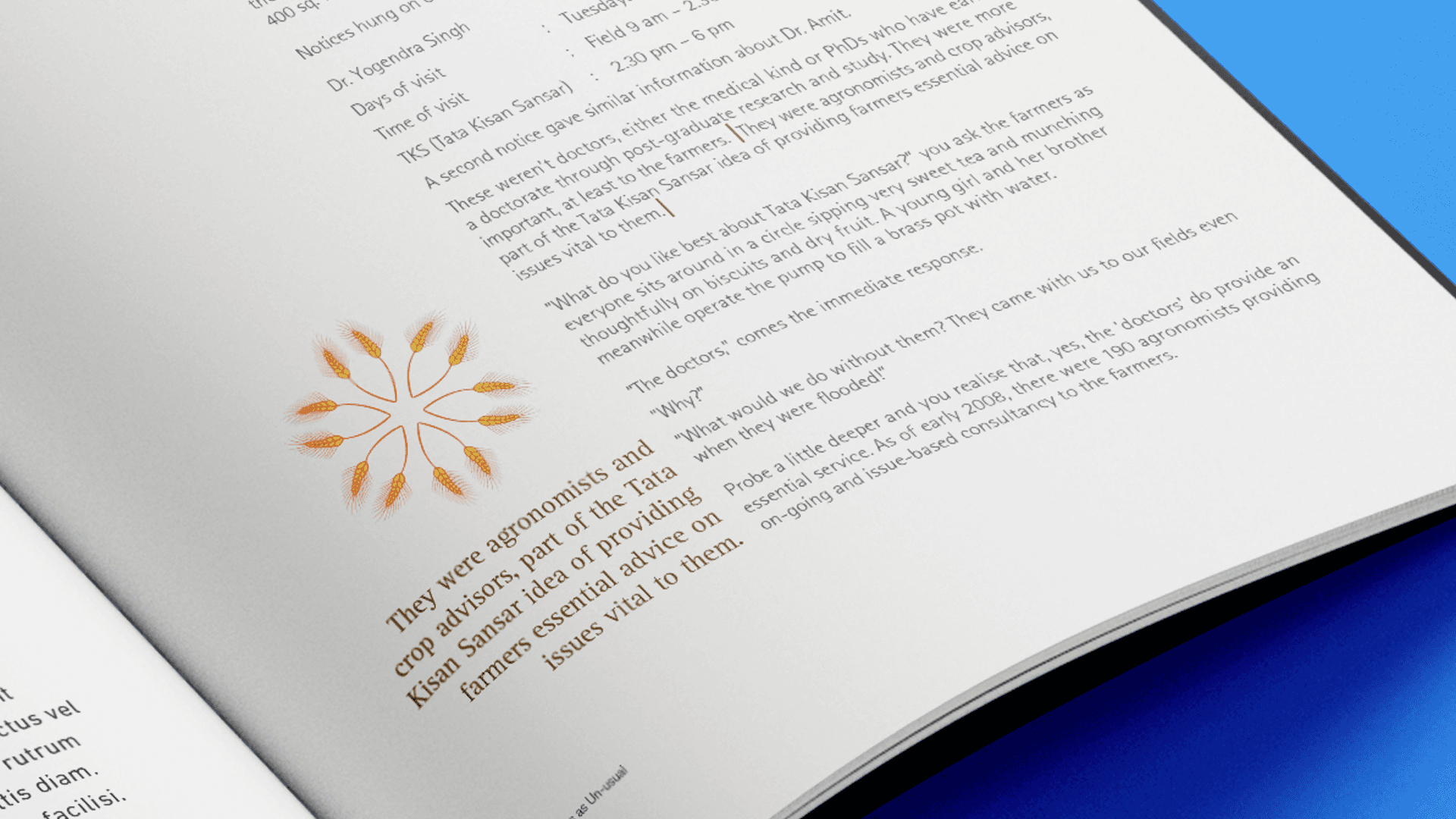
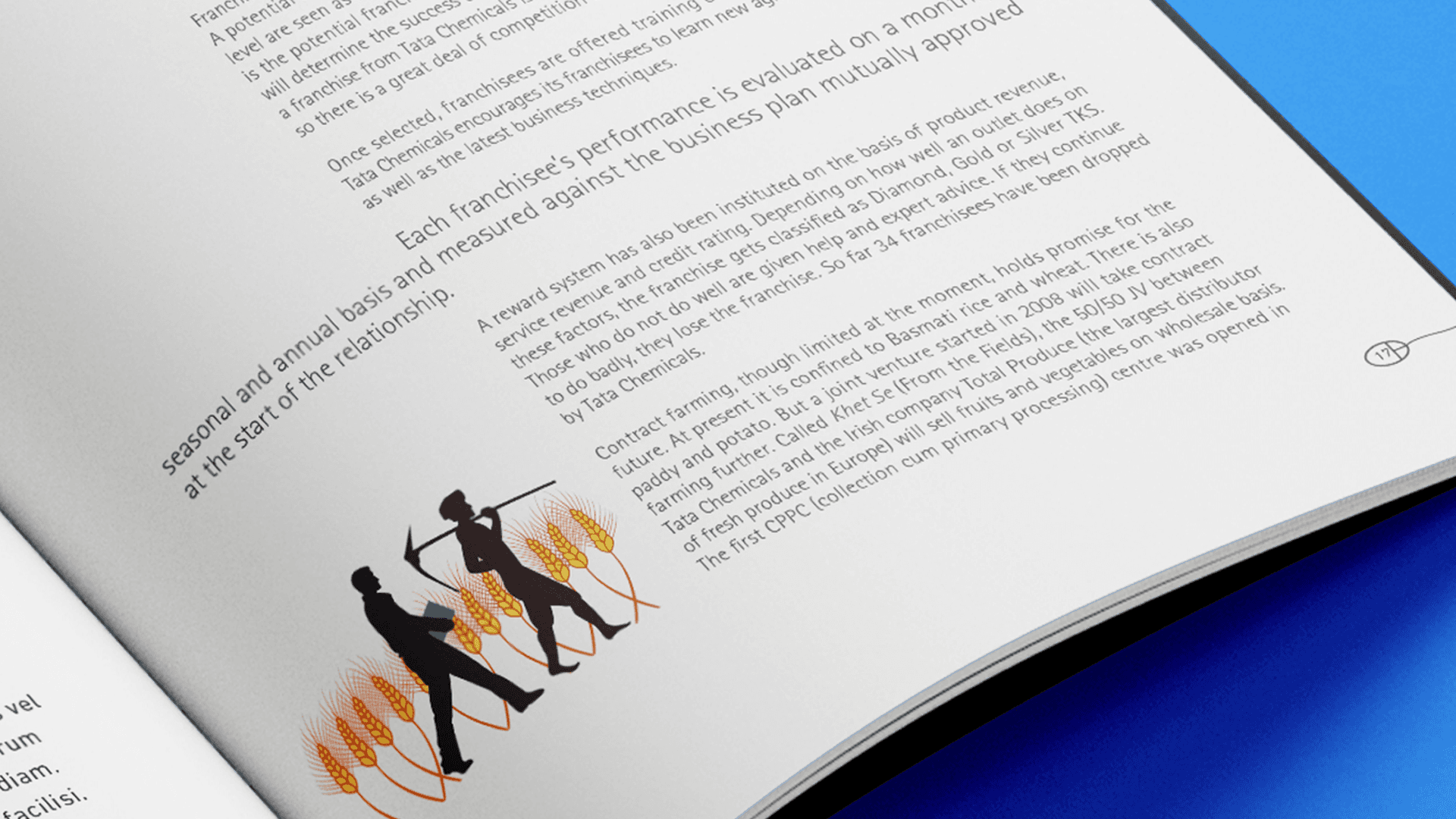
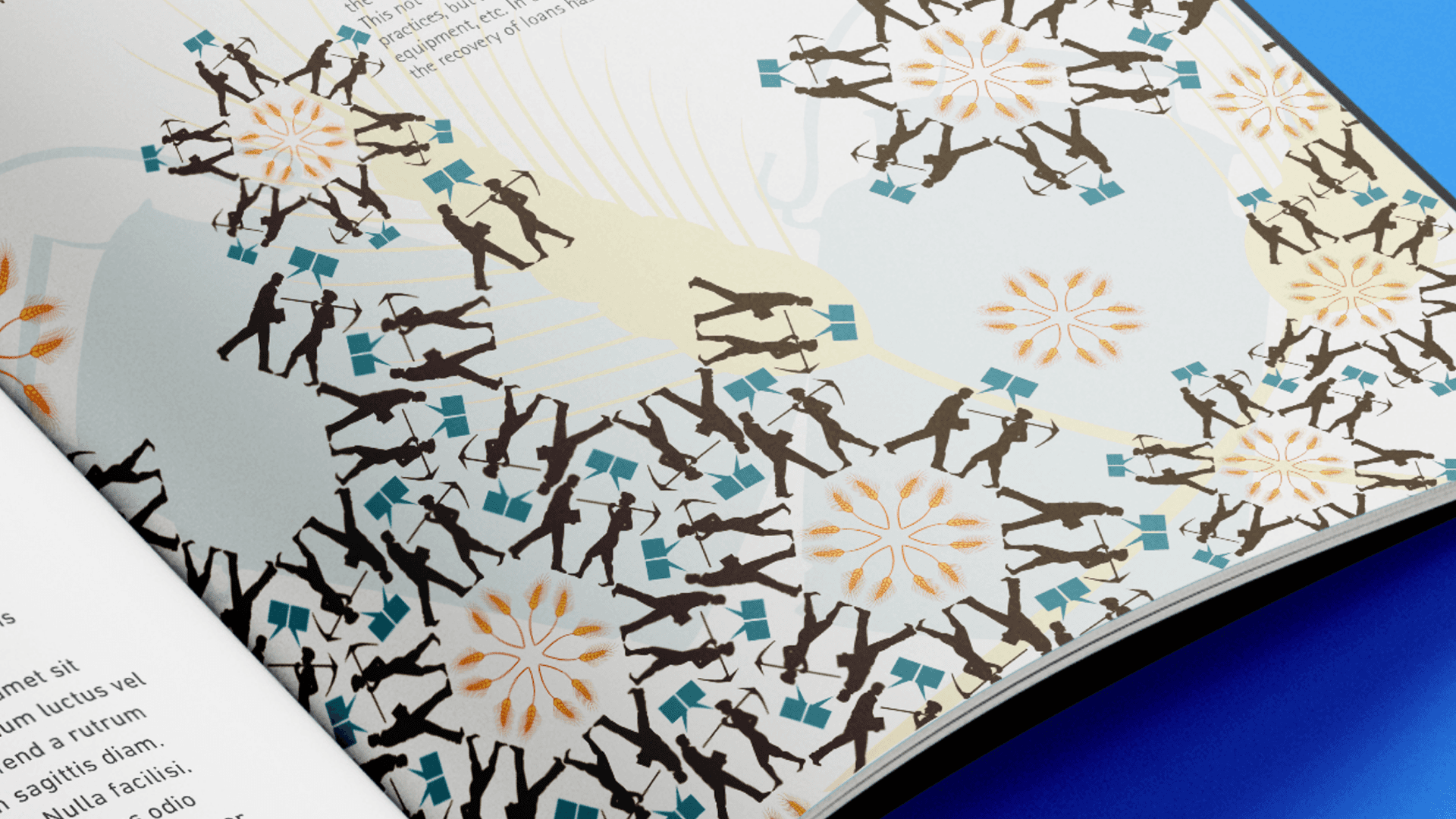
In the absence of consistent visual documentation we created tessellated graphic systems that expanded across spreads. These patterns incorporated symbolic elements such as agricultural tools ,technology, flora and fauna, to visually represent interconnected impact. They were metaphorical and conveyed continuity, scale and collective effort
Information Design
The publication required rigorous information architecture to manage volume without overwhelming the reader. Content was structured for clarity, flow and readability.
Responsible Production
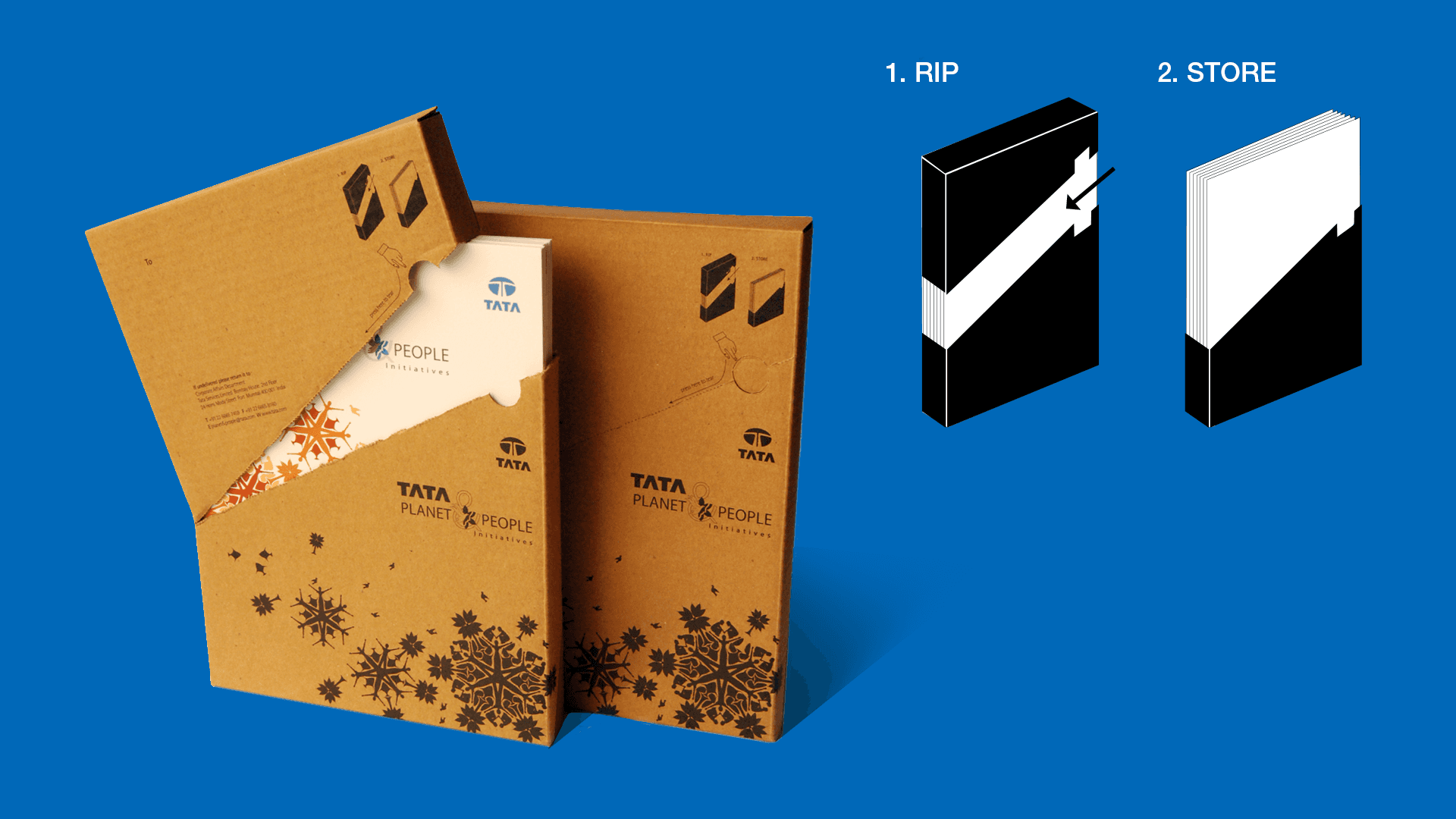
Material selection aligned with Tata’s environmental values. FSC certified paper reduced environmental impact and stackable corrugated packaging reinforced sustainability intent.
The publication embodied the principles it described.
Business and Institutional Impact
■ Strengthened ESG communication: The publication clearly articulated Tata’s social and environmental commitments to stakeholders investors and partners.
■ Enhanced corporate reputation: Structured storytelling reinforced Tata’s identity as a responsible global conglomerate.
■ Stakeholder engagement tool: The book became a reference asset in leadership discussions and institutional presentations.
■ Longevity of impact narrative: As a collector’s item the publication extended the lifecycle of CSR communication beyond annual reporting cycles.
Strategic Value
Planet and People shifted the perception of Tata Group Companies’ CSR efforts, from individual initiatives to consolidated responsibility.
It positioned Tata Group as
■ A values-driven enterprise
■ A long-term steward of environmental and social capital
■ A disciplined communicator of sustainability impact
This engagement reflects how Design Intelligence translates institutional impact into structured narrative authority.